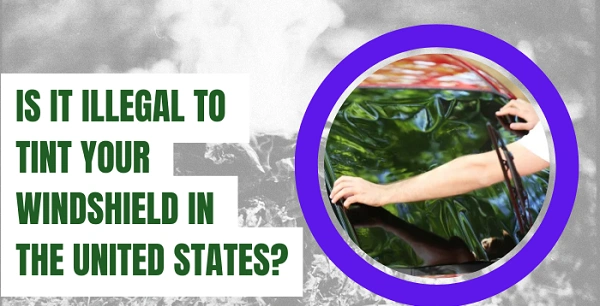
Window tinting is one of the most popular vehicle modifications in the United States, offering privacy, reduced glare, UV protection, interior temperature control, and aesthetic customization that millions of drivers find valuable. While tinting of side windows and rear windows is widely practiced and legal within certain limits across the country, the specific question of windshield tinting involves a more restrictive legal framework that varies by state and that creates meaningful distinctions between what is permitted for the windshield versus what is permitted for other vehicle windows. The legal status of windshield tinting in the United States is not a simple yes or no — it depends on what part of the windshield is being tinted, what type of tint is applied, what level of visible light transmission the tint allows, and what state’s laws govern the vehicle’s registration and operation.
Why Windshield Tinting Is More Restricted Than Other Windows
The windshield occupies a unique position in vehicle safety law because it is the primary viewing surface through which the driver observes the road ahead — it is essential for forward visibility, collision avoidance, and the perception of hazards, traffic signals, pedestrians, and emergency vehicles. While side and rear windows contribute to overall vehicle visibility, the windshield’s role in forward driving vision makes significant obstruction of its transparency an immediate and serious safety concern.
Traffic safety research has consistently demonstrated that reduced visibility is one of the primary contributing factors in traffic accidents, and any modification that reduces the driver’s ability to see clearly through their windshield — particularly at night, in rain, in fog, or in other low-visibility conditions — creates a genuine accident risk. State vehicle equipment laws reflect this safety reality by imposing more stringent restrictions on windshield modifications than on other window modifications.
The Universal Anti-Strip Standard and AS-1 Markings
Every U.S. state’s vehicle equipment code addresses windshield tinting through provisions that reference the AS-1 marking standard established by the American National Standards Institute. The AS-1 line is the line marked on vehicle windshields — typically a horizontal line near the top of the windshield — below which tinting that significantly reduces visible light transmission is prohibited under most state laws. Above the AS-1 line, a non-reflective tint strip is permitted in virtually every state, reflecting the legislative determination that a tint strip in the uppermost portion of the windshield does not materially impair the driver’s primary forward field of vision.
This AS-1 standard creates the most universal element of windshield tinting law across the country — a non-reflective tint strip in the top few inches of the windshield above the AS-1 line is generally legal in most states, while significant tinting of the primary driving area below the AS-1 line is prohibited or highly restricted.
State-by-State Windshield Tinting Regulations
The specific windshield tinting rules vary by state in the width of any permitted non-reflective top strip, the visible light transmission percentage required for any tinting applied to the windshield area, and the specific exceptions available for medical conditions that make sun protection medically necessary.
California Vehicle Code Section 26708 addresses windshield tinting by permitting a top strip that does not extend more than five inches below the top of the windshield or below the AS-1 line, whichever is lower. California prohibits tinting that reduces visible light transmission below a specified threshold for the windshield area below this strip. Texas Transportation Code Section 547.613 similarly permits a five-inch top strip of non-reflective tinting while prohibiting tinting of the primary windshield area. Florida law permits a top strip extending six inches below the top of the windshield. New York permits a six-inch non-reflective top strip.
Several states impose specific visible light transmission requirements for any tinting applied to windshield areas — requiring that at least seventy percent of visible light pass through any tinting material applied to the windshield below the permitted top strip. These VLT requirements ensure that even where some windshield tinting is permitted, the transparency necessary for safe driving is maintained.
Medical Exemptions for Windshield Tinting
Most states that restrict windshield tinting have provisions for medical exemptions that allow individuals with documented medical conditions — such as extreme photosensitivity, lupus, certain skin conditions, or other conditions that make UV exposure medically dangerous — to apply for exemptions that permit darker windshield tinting than the standard rules allow. These medical exemption processes typically require documentation from a licensed physician and issuance of a certificate or permit that must be kept in the vehicle.
Medical exemption requirements vary by state in terms of the conditions that qualify, the documentation required, the VLT levels permitted under the exemption, and whether the exemption is granted for all vehicle windows or specifically for the windshield. Drivers who believe their medical condition may qualify them for a windshield tinting exemption should contact their state’s motor vehicle department for specific application procedures.
Enforcement and Penalties for Illegal Windshield Tinting
Violations of windshield tinting laws are typically enforced as vehicle equipment violations — civil traffic infractions carrying fines that vary by state and sometimes by county. In most states, a first offense for illegal window tinting results in a fix-it ticket or equipment violation notice that requires the illegal tinting to be removed and proof of correction to be provided within a specified timeframe. Failure to correct the violation can result in escalating fines and potential vehicle inspection failures that prevent legal registration renewal.
Officers can visually assess windshield tinting violations during traffic stops, and many law enforcement agencies use VLT meters — devices that measure the visible light transmission of vehicle windows — during traffic stops and vehicle inspection activities to objectively determine whether tinting complies with applicable standards. Vehicles that fail their state’s periodic safety inspection due to illegal windshield tinting cannot be legally operated on public roads until the tinting is removed or modified to comply with applicable standards.
Aftermarket Tinting and New Vehicle Windshields
Vehicle manufacturers install windshields that comply with federal motor vehicle safety standards and applicable state equipment laws. Aftermarket tinting applied by third-party installers is the most common source of windshield tinting violations, as some installers apply tinting that the vehicle owner believes is legal but that does not comply with applicable state standards. Vehicle owners who have aftermarket tinting installed are responsible for ensuring that the installation complies with all applicable state requirements, and the tinting installer’s representation of legality does not protect the owner from enforcement consequences if the tinting violates state law.
The Bottom Line on Tinting Your Windshield
Tinting the windshield of a motor vehicle is restricted in every U.S. state, with universal permission for a non-reflective top strip above or near the AS-1 line and general prohibition on significant tinting of the primary driving area below that line. Specific rules including permitted top strip width, required VLT percentages, and available medical exemptions vary by state. Violations are enforced as vehicle equipment infractions with fines and correction requirements. Medical conditions can qualify drivers for exemptions in most states through a documentation and permit process. Any driver considering windshield tinting should verify the specific requirements of their state before installation and ensure that any aftermarket tint applied complies with applicable VLT and placement standards to avoid citations and inspection failures.