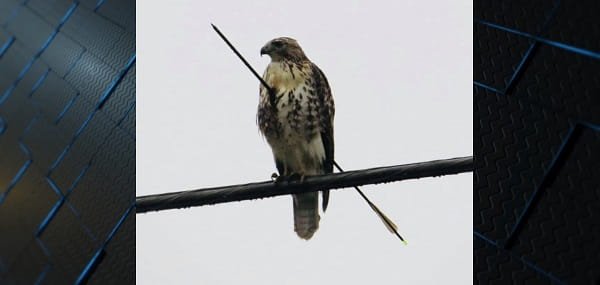
Hawks are among the most visible and frequently encountered birds of prey in the United States, soaring over highways, perching on fence posts along rural roads, and hunting small mammals and birds in both rural and suburban environments. Their presence is familiar to millions of Americans, and their predatory behavior — particularly the hunting of backyard songbirds and occasional attacks on small pets — leads some homeowners and farmers to consider whether eliminating them is a legal option. The legal answer is unambiguous and categorical: shooting a hawk is a serious federal crime, and the penalties for doing so are substantial enough to warrant the full attention of anyone considering it.
The Migratory Bird Treaty Act: Comprehensive Federal Protection
The primary federal law protecting hawks from being shot, killed, captured, or disturbed is the Migratory Bird Treaty Act of 1918, which implements a series of international treaties between the United States and neighboring countries protecting migratory bird species. The MBTA prohibits any person from pursuing, hunting, taking, capturing, killing, possessing, offering for sale, selling, purchasing, importing, exporting, or transporting any migratory bird, or any part, nest, or egg of any migratory bird, without a specific federal permit issued by the U.S. Fish and Wildlife Service.
Virtually all hawk species found in the United States are covered by the MBTA. Common species including the red-tailed hawk, Cooper’s hawk, sharp-shinned hawk, red-shouldered hawk, broad-winged hawk, Swainson’s hawk, ferruginous hawk, and all other North American hawk species are listed as protected migratory birds under the treaties the MBTA implements. Shooting any of these species without federal authorization is a federal crime regardless of the shooter’s stated justification.
Criminal Penalties for Shooting a Hawk
The penalties for violating the MBTA by shooting a hawk are serious and reflect Congress’s longstanding commitment to the protection of migratory bird species. Criminal violations of the MBTA carry penalties of up to $15,000 in fines and up to six months in federal prison for misdemeanor violations. Felony violations — which apply to knowing and willful conduct or to conduct involving commercial activity — carry penalties of up to $50,000 in fines and up to two years in federal prison. Civil penalties can reach $5,000 per violation, and birds, equipment, and vehicles used in illegal taking of protected birds are subject to forfeiture.
The U.S. Fish and Wildlife Service’s Office of Law Enforcement actively investigates MBTA violations, including reports of hawks being shot, trapped, or poisoned. Members of the public who observe illegal killing of hawks can report violations to the USFWS through its reporting hotline, and these tips are taken seriously by federal wildlife law enforcement.
The Bald and Golden Eagle Protection Act: Additional Coverage
Some hawk-like birds receive additional federal protection beyond the MBTA. Ospreys — sometimes colloquially called fish hawks — and other raptor species that may be confused with hawks are covered by the MBTA. Bald eagles and golden eagles receive additional protection under the Bald and Golden Eagle Protection Act, which imposes penalties even more severe than the MBTA for killing or disturbing these species. Any bird that appears to be a hawk should be assumed to be protected under federal law unless a trained wildlife professional specifically confirms otherwise.
Common Justifications That Do Not Provide a Legal Defense
Several justifications are commonly offered by people who shoot hawks, and understanding why these justifications do not constitute legal defenses under the MBTA is important for anyone who might be tempted by them.
The protection of livestock and poultry is perhaps the most sympathetically presented justification for shooting hawks. Farmers and backyard poultry keepers who experience hawk predation on their chickens often feel that they have no choice but to eliminate the predator to protect their animals. However, the MBTA does not contain a livestock or poultry protection exemption that authorizes private citizens to shoot hawks. The appropriate legal response to hawk predation on livestock is to contact the USFWS or state wildlife agency for guidance on non-lethal deterrence methods and, in cases involving significant ongoing depredation, to explore the permit options that may be available for depredation management.
The protection of pets — particularly small dogs and cats that hawks occasionally target — similarly does not provide a legal defense for shooting hawks under the MBTA. Non-lethal deterrence measures including supervision of small pets outdoors, covered outdoor enclosures, and visual deterrents are the legally appropriate responses to hawk activity around pets.
The mistaken belief defense — claiming not to have known the bird was a hawk — provides very limited legal protection under the MBTA, which applies to all listed species regardless of the shooter’s knowledge of the specific bird’s protected status. The burden is on the shooter to know what they are targeting before firing.
Legal Permits for Specific Circumstances
The USFWS does issue specific permits for certain activities involving raptors including hawks. Falconry permits allow licensed falconers to capture and possess certain raptor species for the practice of falconry under a detailed federal and state permitting framework. Scientific research permits allow qualified researchers to capture and study hawks for legitimate scientific purposes. Depredation permits for specific situations involving chronic predation problems can be applied for through USFWS regional offices.
These permits require compliance with detailed requirements and are not available to private homeowners who simply want to eliminate hawks from their property. The permit application process is designed to ensure that any authorized interaction with protected birds serves legitimate purposes and is conducted by qualified individuals under appropriate oversight.
Non-Lethal Deterrence Options
Landowners and homeowners who experience problems with hawk predation on poultry or small pets have numerous legal and effective non-lethal deterrence options. Visual deterrents including reflective tape, predator decoys, and motion-activated scare devices can discourage hawks from hunting in specific areas. Physical barriers including covered chicken runs, hawk-proof netting over poultry enclosures, and enclosed outdoor pet areas prevent access without harming the birds. Supervision of small pets during outdoor time — particularly during dawn and dusk when hawk activity is highest — is both effective and legally straightforward.
The Bottom Line on Shooting a Hawk
Shooting a hawk is a serious federal crime under the Migratory Bird Treaty Act, carrying penalties of up to $50,000 in fines and two years in federal prison for felony violations. The protection applies to virtually all North American hawk species and provides no defense for shooting based on livestock protection, pet protection, or mistaken identity claims. Legal permit pathways exist for falconry and scientific research under strict conditions. Non-lethal deterrence options provide legally appropriate and practically effective alternatives for property owners dealing with hawk predation concerns.