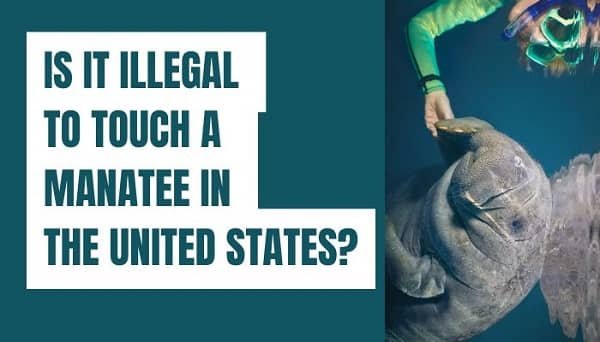
Few marine mammals inspire as much affection among Floridians and coastal visitors as the manatee. These slow-moving, gentle giants — often called sea cows — have become one of Florida’s most beloved wildlife symbols, drawing snorkelers, kayakers, and wildlife enthusiasts to warm coastal waters in hopes of an encounter. But as manatee populations have struggled against the pressures of boat strikes, habitat loss, and water quality degradation, federal and state law have erected significant legal protections around these animals that every person who enters manatee habitat needs to understand. The short answer to whether touching a manatee is illegal is yes — in most circumstances, touching a wild manatee is a federal violation with real criminal and civil consequences.
Federal Protection Under the Marine Mammal Protection Act
The primary federal law protecting manatees is the Marine Mammal Protection Act (MMPA) of 1972, which prohibits the take of any marine mammal in U.S. waters without a specific federal permit. Under the MMPA, take is defined broadly to include any act of hunting, killing, capture, collection, or harassment — and harassment is further defined as any act of pursuit, torment, or annoyance that has the potential to injure a marine mammal or that has the potential to disturb a marine mammal by causing disruption of behavioral patterns including migration, breathing, nursing, breeding, feeding, or sheltering.
The harassment definition is what makes touching a manatee legally problematic even when no physical injury results. Approaching a wild manatee closely enough to touch it almost certainly disrupts its natural behavior — causing it to alter its swimming direction, interrupt feeding or resting, or expend energy avoiding human contact. Courts and federal enforcement agencies have consistently interpreted this definition to encompass the kind of close physical contact that tourists and snorkelers engage in when they pet, hold, or ride manatees.
The Endangered Species Act and Additional Federal Protection
Manatees have historically been listed as endangered under the Endangered Species Act (ESA), providing an additional and overlapping layer of federal legal protection. The ESA prohibits the take — defined even more broadly than under the MMPA — of any listed species, including actions that harass, harm, pursue, hunt, shoot, wound, kill, trap, capture, or collect any individual of a listed species. In 2017, the U.S. Fish and Wildlife Service downlisted the West Indian manatee from endangered to threatened status following population recovery, but the ESA’s protections remain fully in force for threatened species, and all prohibitions on take continue to apply.
Florida State Law: The Florida Manatee Sanctuary Act
Florida has enacted its own comprehensive manatee protection framework through the Florida Manatee Sanctuary Act, which designates the entire state of Florida as a manatee sanctuary and prohibits any person from willfully or negligently annoying, molesting, harassing, or disturbing any manatee. The Florida Fish and Wildlife Conservation Commission enforces this statute and has authority to cite and prosecute individuals who touch, chase, separate, or interfere with manatees in Florida waters.
Florida law enforcement — including FWC officers, county marine patrol units, and the Florida Department of Law Enforcement — take manatee protection enforcement seriously. Officers regularly patrol popular manatee aggregation sites including Crystal River, Blue Spring State Park, and Tampa Bay, and documented cases of illegal manatee interaction are prosecuted. Undercover enforcement operations in Crystal River — a particularly popular snorkeling destination where wild manatee interactions have historically been common — have resulted in numerous citations and prosecutions.
What Counts as Illegal Interaction?
Federal and state guidelines make clear that the following types of interactions with wild manatees are illegal: touching, petting, or stroking a manatee even gently; riding a manatee or holding onto one as it swims; chasing a manatee through the water; separating a mother manatee from her calf; surrounding a manatee with multiple swimmers; cornering a manatee in a confined area; giving a manatee food or water; and poking, prodding, or disturbing a resting manatee. Even well-intentioned contact — reaching out to touch a manatee that swims close to a snorkeler — constitutes illegal harassment when it disrupts the animal’s natural behavior.
The key principle underlying all of these prohibitions is passive observation. The legally safe way to encounter wild manatees in Florida waters is to remain still, allow the manatee to approach on its own terms, and refrain from any action that initiates or prolongs physical contact. If a manatee chooses to swim up to a stationary person and makes contact of its own accord, the legal exposure is considerably lower than in cases where a person actively pursues or reaches for the animal.
Penalties for Illegal Manatee Interaction
Violations of the MMPA can result in civil penalties of up to $11,000 per violation and criminal penalties of up to $100,000 in fines and one year in federal prison for willful violations. Violations of the Endangered Species Act carry civil penalties of up to $25,000 per violation and criminal penalties for knowing violations of up to $50,000 and one year in federal prison. Florida state violations under the Manatee Sanctuary Act are typically prosecuted as misdemeanors with fines, though repeat violations and cases involving significant disturbance can result in enhanced penalties.
Permitted Manatee Interaction Programs
Legitimate permitted swim-with-manatee programs do exist in Florida, operated by licensed tour operators who have obtained appropriate authorizations from the FWC and operate under guidelines designed to minimize disturbance to the animals. These permitted programs provide the only legal pathway for intentional close-range manatee encounters and operate under strict behavioral guidelines that differ meaningfully from the unrestricted touching and handling that occurs when untrained visitors encounter manatees without guidance.
The Bottom Line on Touching a Manatee
Touching a wild manatee is illegal under both federal law — the MMPA and ESA — and Florida state law. The legal framework is comprehensive, actively enforced, and carries real criminal and civil penalties. The appropriate way to experience wild manatees is through passive observation that allows these protected animals to behave naturally without human interference. Manatee populations have only partially recovered from decades of decline, and the legal protections that prohibit touching and harassing them reflect a genuine and urgent conservation need that every visitor to Florida waters should respect.