In April 2026, a major controversy emerged inside New York City’s government after a lawsuit was filed by Ebony Huntley, a former investigator with the city’s Department of Probation. The case quickly drew attention because it involves allegations of workplace retaliation, internal misconduct, and possible abuse of authority at a senior level.
Who is Ebony Huntley?
Ebony Huntley is a retired NYPD lieutenant who later worked as a chief investigator in the New York City Department of Probation. She reportedly earned around $170,000 a year in that role. Her job involved overseeing internal investigations and ensuring that complaints within the department were properly handled.
Her experience and rank made her a key figure in maintaining accountability inside the agency.
What the Lawsuit Claims
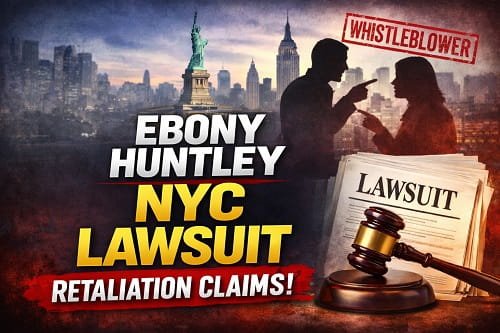
The lawsuit, filed in Manhattan court, centers on one main accusation: Huntley says she was fired for doing her job.
According to her complaint, Huntley received an anonymous letter from a group of employees raising concerns about the department’s leadership. The letter allegedly claimed that the newly appointed probation commissioner had a prior personal relationship with a senior legal official in the department.
Huntley says she followed proper procedure by forwarding the complaint to the city’s Department of Investigation, which is responsible for looking into misconduct.
However, what happened next is the core of the lawsuit.
She claims that just one day after reporting the issue, she was called into a meeting and fired by the same senior official named in the complaint.
Allegations of Retaliation
Huntley argues that her termination was not coincidental. Instead, she says it was a direct act of retaliation for whistleblowing.
In legal terms, this falls under whistleblower protection laws, which are meant to protect employees who report wrongdoing. If proven, retaliation in such cases can lead to serious legal consequences for the employer.
Her lawsuit claims:
- She was punished for reporting concerns in good faith
- The firing was sudden and unjustified
- The action violated employment and whistleblower laws
She is now seeking around $200,000 in lost wages and damages.
The People Involved
The lawsuit names multiple individuals and entities, including:
- The New York City Department of Probation
- The probation commissioner appointed earlier in 2026
- A senior legal official within the department
The complaint also mentions that the commissioner had recently rehired the same official, which raised concerns among staff.
These details have added a layer of complexity to the case, as it touches both on hiring decisions and internal relationships.
City’s Response
New York City officials have not admitted wrongdoing but have acknowledged the seriousness of the allegations.
Reports indicate that an official investigation has been launched into the matter.
City leadership has stated that they take misconduct claims seriously but have avoided detailed public comments while the case is ongoing.
This is a typical approach in such legal situations, especially when litigation is active.
Why This Case Matters
This lawsuit is not just about one employee losing her job. It raises broader questions about how government agencies handle internal complaints.
Some key issues include:
- Are whistleblowers truly protected in practice?
- Can employees safely report misconduct without fear?
- How transparent are internal investigations in public institutions?
If Huntley’s claims are proven, the case could lead to policy changes and stricter enforcement of whistleblower protections.
What Happens Next
The case will now move through the legal system. Both sides will present evidence, and the city will have a chance to formally respond in court.
Possible outcomes include:
- A financial settlement
- Reinstatement or compensation
- Policy reforms within the department
- Or dismissal of the claims if not proven
Legal experts say such cases can take months or even years to resolve, depending on complexity.
Final Thoughts
The Ebony Huntley lawsuit has already sparked debate about workplace fairness and accountability inside government agencies. The timeline of events—especially the short gap between her complaint and her firing—has made the case particularly sensitive.
At its core, this is a test of whether systems designed to protect truth-telling employees actually work when it matters most.
As the investigation continues, the outcome could have lasting effects not just for Huntley, but for how whistleblower cases are handled across New York City.