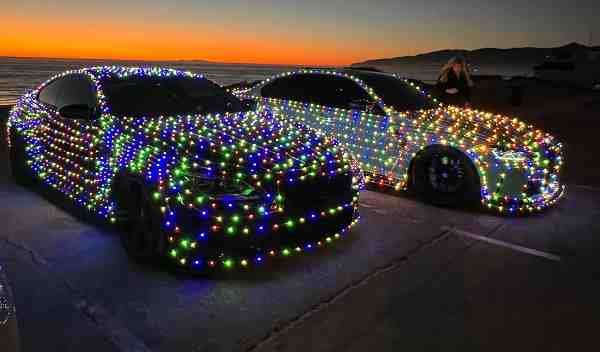
The holiday season inspires creativity in many Americans, and among the more ambitious expressions of seasonal festivity is the practice of decorating vehicles with Christmas lights, wreaths, inflatable figures, and other holiday embellishments. Social media regularly features videos of cars and trucks elaborately decorated with twinkling lights, and the question of whether this practice is legal is one that involves vehicle equipment laws, traffic safety regulations, and the specific requirements that govern what types of lighting are permitted on vehicles operating on public roads. The legal answer is not a simple yes or no — it depends on the state, the type of lights used, where they are placed on the vehicle, and whether the vehicle is being driven on public roads or displayed in a private setting.
Vehicle Equipment Laws and the Lighting Framework
The legal framework governing vehicle lighting in the United States is primarily a matter of state law through vehicle equipment codes, supplemented by federal motor vehicle safety standards established by the National Highway Traffic Safety Administration that apply to vehicle manufacturers. Every state’s vehicle code includes detailed provisions governing what lights are required on motor vehicles, what lights are permitted, and what lighting configurations are prohibited because they could confuse, distract, or mislead other drivers.
The core concern that vehicle lighting laws address is the danger of confusion — a vehicle with non-standard lighting that could be mistaken for an emergency vehicle, that could distract other drivers, that could impair the visibility of required safety signals, or that could otherwise create hazardous conditions on public roads. These safety concerns are what make certain Christmas light configurations legally problematic for vehicles driven on public roads, even when the decorative intent is entirely benign.
Federal Safety Standards and Aftermarket Lighting
The National Highway Traffic Safety Administration’s Federal Motor Vehicle Safety Standards establish baseline requirements for vehicle lighting including headlights, taillights, brake lights, turn signals, and other required equipment. These federal standards govern the original equipment on new vehicles and establish minimum performance requirements that state vehicle codes build upon. Aftermarket lighting modifications that affect required safety equipment — including Christmas lights placed in a way that interferes with the visibility or function of required lights — can create federal safety standard compliance issues in addition to state traffic law violations.
State-by-State Analysis of Christmas Lights on Vehicles
The specific legality of Christmas lights on a vehicle varies by state, and the critical legal factors in most jurisdictions involve whether the lights are placed where they could be confused with required safety signals, whether they interfere with the visibility of required lighting, and whether the colors used could be confused with emergency vehicle lighting.
Most states prohibit displaying red or blue lights on the front of a vehicle that is not an authorized emergency vehicle. Red and blue are the colors associated with law enforcement, fire, and emergency response vehicles, and displaying these colors on private vehicles creates a risk of impersonation and driver confusion that most states specifically prohibit. Christmas lights that include red and blue LEDs displayed on the front of a vehicle being driven on public roads will violate these provisions in most states.
California Vehicle Code provisions addressing vehicle lighting prohibit displays of colors that could be confused with emergency vehicle lighting and restrict the use of flashing or strobe lighting that could distract other drivers. Placing Christmas lights that include alternating flashing patterns resembling emergency vehicle signals on a California vehicle driven on public roads would violate these provisions. Many other states have equivalent provisions with similar restrictions on emergency-color lighting and flashing patterns.
The placement of lights that could obscure required safety equipment — brake lights, turn signals, taillights, and headlights — creates additional violations. A string of Christmas lights draped across a vehicle’s rear that reduces the visibility of brake lights or turn signals would create a safety equipment violation in virtually every state regardless of the holiday motivation.
Parking Lot Displays and Private Property Exhibitions
The legal analysis shifts considerably for vehicles that are displayed with Christmas lights in private parking lots, driveways, or other settings where they are not being driven on public roads. A vehicle decorated with Christmas lights that is parked in a private driveway, displayed in a shopping center parking lot as a holiday attraction, or exhibited at a private event on private property is not subject to the vehicle equipment laws that govern vehicles on public roads.
The vehicle equipment codes of every state apply to vehicles operated on public roads — they are traffic safety laws that govern the conditions under which vehicles can safely share road space with other users. A parked vehicle that is not being driven is not subject to these operational requirements in the same way, and elaborate Christmas light displays on stationary vehicles in private settings are generally permitted as long as the underlying property rules and local ordinances governing lighting, noise, and events are satisfied.
Parades and Special Event Permits
An important legal pathway for vehicles decorated with Christmas lights — including elaborate holiday displays — is the special event and parade permit system that most municipalities operate. Holiday parades, Christmas light parades, and similar community events involve vehicles decorated with extensive lighting that would not meet the standard vehicle equipment requirements for operation on public roads under normal circumstances. These events are permitted through special event and parade permit frameworks that authorize temporary deviations from standard vehicle equipment requirements for the duration of a permitted parade or event.
Vehicle owners who want to drive their elaborately decorated holiday vehicles on public roads as part of an organized community event can legally do so within the framework of a properly permitted parade or special event. The permit essentially authorizes the deviation from standard vehicle equipment requirements for the specific time and place of the event, providing a legal pathway for exactly the kind of festive vehicle display that holiday decorating enthusiasm inspires.
Practical Legal Guidance for Holiday Vehicle Decoration
Drivers who want to decorate their vehicles with Christmas lights for road use can minimize legal risk by avoiding red and blue lights on the front of the vehicle, choosing lights that do not flash or strobe in patterns resembling emergency vehicles, ensuring that no required safety equipment including brake lights, turn signals, headlights, and taillights is obscured or impaired by the decoration, keeping light displays on the roof, hood, or non-safety-equipment portions of the vehicle, and checking their specific state’s vehicle equipment laws for any additional restrictions on decorative lighting.
White, green, gold, and other non-emergency colors in non-flashing configurations on portions of the vehicle that do not interfere with required safety equipment represent the lowest legal risk approach to holiday vehicle decoration for road use. Battery-operated lights that do not connect to the vehicle’s electrical system and do not create distracting reflections in the driver’s own field of vision or in the rearview mirrors of preceding vehicles further reduce both legal and practical safety concerns.
The Bottom Line on Christmas Lights on Cars
Putting Christmas lights on a car is not categorically illegal in the United States, but driving a decorated vehicle on public roads with lights that include prohibited colors, create confusion with emergency vehicle signals, or obstruct required safety equipment violates state vehicle equipment laws in most jurisdictions. Parked vehicle displays on private property are generally legal regardless of the elaborateness of the decoration. Parade permits provide legal authorization for festively decorated vehicles participating in organized holiday events on public roads. Drivers who choose to decorate their vehicles for road use should select light colors and configurations that avoid prohibited emergency colors, flashing emergency patterns, and interference with required safety lighting to stay within the legal framework while celebrating the season.