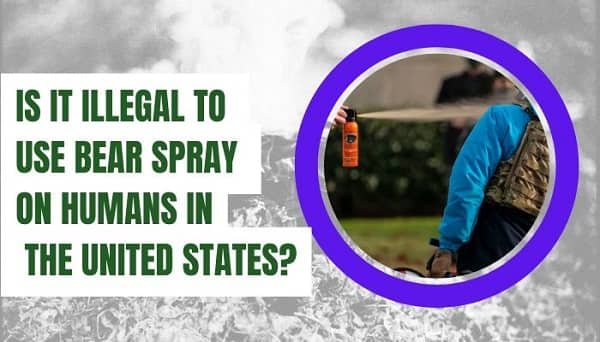
Bear spray is one of the most powerful commercially available aerosol deterrent products on the American market — a concentrated capsaicin-based formula designed to stop charging bears through intense inflammatory effects on the eyes, nose, throat, and respiratory system. Marketed specifically for wildlife defense in backcountry environments, bear spray contains significantly higher concentrations of oleoresin capsicum than standard personal defense pepper sprays, typically ranging from one to two percent major capsaicinoids compared to the lower concentrations found in most civilian self-defense sprays. Given its extraordinary potency, the question of whether deploying bear spray against a human being is legal in the United States is one that involves federal regulations governing the product’s labeling and intended use, self-defense law, and the legal consequences of deploying any chemical agent against another person.
What Bear Spray Is and How It Is Regulated
Bear spray is regulated at the federal level as a pesticide under the Federal Insecticide, Fungicide, and Rodenticide Act, administered by the Environmental Protection Agency. Because bear spray is marketed and labeled specifically as a wildlife deterrent for use against bears and other large predators, EPA regulations governing the product’s label require that it be used only for its stated purpose — deterring wildlife. Using a product regulated under FIFRA for a purpose other than what is stated on its EPA-approved label is technically a violation of FIFRA’s label compliance requirements, which require that pesticides be used only in accordance with their registered label directions.
This regulatory dimension means that spraying a human being with bear spray — which is labeled exclusively for wildlife deterrence — constitutes an off-label use that violates EPA registration requirements in addition to any other legal consequences that might flow from the act. However, the practical enforcement of FIFRA label compliance violations by the EPA against individuals who use bear spray in self-defense is essentially nonexistent, and the primary legal analysis of using bear spray on a human focuses on assault law, self-defense doctrine, and the specific circumstances of the deployment.
Using Bear Spray as an Assault: Criminal Consequences
Deploying bear spray against another person without legal justification constitutes criminal assault and battery in every U.S. state. The act of spraying a concentrated chemical agent into another person’s face without their consent — causing immediate severe pain, temporary blindness, respiratory distress, and potential serious injury — satisfies the elements of battery under every state’s criminal code. The extraordinary potency of bear spray, which is designed to stop a charging grizzly bear, makes its deployment against a human being particularly serious from a legal standpoint.
Many states classify the use of chemical agents including pepper spray and bear spray in an assault as aggravated assault or assault with a dangerous weapon, elevating what might otherwise be a misdemeanor simple battery to a felony charge depending on the circumstances. When bear spray is used to assault another person who is not posing an immediate physical threat, the severity of the resulting injuries — which can include permanent eye damage, severe respiratory distress requiring hospitalization, and other serious physical consequences — can support charges of aggravated assault with serious bodily injury, with potential sentences measured in years of imprisonment.
Self-Defense and Bear Spray: When Use May Be Justified
The analysis changes fundamentally when bear spray is deployed in genuine self-defense against an imminent threat of physical harm. Every U.S. state recognizes the right of individuals to use reasonable force to defend themselves from an imminent, unlawful physical attack, and this right extends to the use of chemical agents including both standard pepper spray and bear spray when the circumstances justify defensive force.
The legal standard for self-defense in most states requires that the person using force reasonably believe they are facing an imminent threat of unlawful physical harm, that the force used be proportionate to the threat faced, and that the person asserting self-defense not be the initial aggressor in the encounter. Bear spray deployed in genuine self-defense — against an attacker who is actively threatening serious physical harm — satisfies these requirements and provides a legal justification for what would otherwise be an assault.
However, the extraordinary potency of bear spray raises proportionality questions that standard pepper spray does not. A self-defense use of force must be proportionate to the threat being defended against, and using a product designed to stop a charging grizzly bear against a person poses a higher threshold of potential harm than using standard civilian pepper spray. Courts examining self-defense claims involving bear spray look at whether the specific circumstances justified the level of force deployed — a genuine and serious physical threat that justifies defensive chemical deployment is different from a minor altercation where a less potent response would have been adequate.
Law Enforcement and Authorized Use
Law enforcement agencies across the United States use chemical agents including pepper spray and OC-based products as approved use-of-force options, and some specialized wilderness law enforcement contexts involve bear spray-grade products as part of authorized equipment. The authorized use of chemical agents by law enforcement is governed by departmental use-of-force policies and applicable law, and officers who deploy approved chemical agents within the scope of authorized use-of-force are exercising a different legal framework than private individuals.
Bear Spray vs. Standard Pepper Spray: The Legal Distinction
It is worth noting the legal distinction between bear spray and standard civilian self-defense pepper spray. Most U.S. states have laws explicitly authorizing civilians to carry and use pepper spray for personal self-defense. These provisions typically cover standard OC sprays designed and marketed for personal defense. Bear spray — labeled as a wildlife deterrent rather than a personal defense product — is not necessarily covered by these explicit self-defense chemical agent authorization provisions, creating a regulatory gap that places bear spray in a more legally ambiguous position than standard personal defense sprays even in legitimate self-defense contexts.
The Bottom Line on Using Bear Spray on Humans
Using bear spray on a human being without legal justification is illegal in every U.S. state as criminal assault and battery, potentially elevated to aggravated assault given the product’s extraordinary potency. Using bear spray in genuine self-defense against an imminent serious physical threat may be legally justified under self-defense doctrine, but proportionality considerations and the product’s extraordinary power make this a context-specific analysis. Federal FIFRA label compliance requirements add a regulatory dimension that classifies any use against humans as off-label. Anyone who carries bear spray in settings where human encounters are possible should understand both its extraordinary physical effects and the complete legal framework governing its use.