A new lawsuit filed in 2026 against The Kroger Company has brought renewed attention to how supermarkets label and market their meat products. The case, centered in California, raises serious questions about transparency, consumer trust, and the growing demand for ethically sourced food.
Background of the Lawsuit
The legal action was filed in March 2026 in Los Angeles County by Animal Outlook, a nonprofit animal protection organization. The lawsuit targets both Kroger and its subsidiary Ralphs Grocery Company, a major grocery chain operating in Southern California.
According to court filings, the complaint accuses the companies of misleading customers through in-store signage and marketing claims related to meat products. The case cites violations of California’s False Advertising Law and Unfair Competition Law.
At its core, the lawsuit argues that Kroger used appealing terms to influence consumer perception without ensuring those claims were accurate or verifiable.
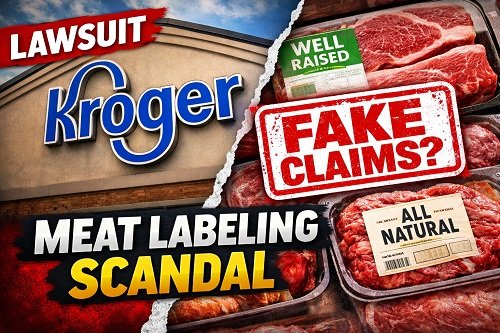
Key Allegations: “Humane-Washing” and Misleading Labels
One of the central accusations in the lawsuit is something critics are calling “humane-washing.” This refers to the use of language that suggests higher animal welfare standards than actually exist.
Investigators documented several phrases used prominently in Ralphs stores, including:
- “Well raised”
- “No antibiotics”
- “Raised naturally”
These signs were displayed above meat counters and refrigerated sections.
However, the lawsuit claims that many of the products beneath these labels came from conventional industrial farming systems, not from farms that meet higher welfare standards.
In some instances, products labeled under “no antibiotics” signage reportedly included meat from large-scale suppliers where antibiotic use is common in industry practices.
This mismatch between labeling and sourcing forms the backbone of the legal complaint.
Private Label vs Reality: The “Simple Truth” Issue
Kroger operates a well-known private label brand called “Simple Truth,” which markets itself as offering higher-quality, responsibly sourced food.
The lawsuit acknowledges that this premium line may follow stricter animal welfare standards. However, it argues that:
- These standards do not apply across all Kroger products
- Regular private-label meats are sometimes displayed under the same “well raised” signage
This creates confusion for customers who may assume all products in that section meet the same criteria.
For beef products specifically, the complaint alleges that Kroger lacks clearly defined animal welfare standards, making claims like “well raised” difficult to substantiate.
Legal Grounds and Consumer Protection
The lawsuit relies on two major California laws:
- False Advertising Law (FAL)
- Unfair Competition Law (UCL)
Under these laws, even technically vague or “soft” marketing language can be considered illegal if it is likely to mislead a reasonable consumer.
Legal experts note that modern consumers are increasingly influenced by ethical labels such as “organic,” “natural,” or “humanely raised.” When companies use these terms without strict definitions, they risk legal exposure.
The plaintiffs are seeking court orders to:
- Remove or correct misleading signage
- Ensure claims match actual sourcing practices
- Potentially introduce stricter compliance standards
Kroger’s Response and Current Status
As of the latest reports, Kroger has not issued a detailed public response to the specific allegations.
The case is still in its early stages, and no final judgment has been made. It may take months or even years before a clear legal outcome is reached.
However, the lawsuit has already drawn attention across the retail and food industries, especially as similar cases have been filed against other companies in recent years.
Broader Impact on the Grocery Industry
This lawsuit goes beyond one company. It reflects a larger shift in consumer expectations.
Today’s shoppers are more aware of:
- Animal welfare
- Food sourcing practices
- Health and safety standards
Retailers have responded by adding premium labels and ethical claims. But when those claims are not backed by consistent standards, legal risks increase.
Industry analysts suggest that this case could push supermarkets to:
- Standardize labeling definitions
- Improve supply chain transparency
- Use third-party certifications for credibility
If the court rules against Kroger, it could set a precedent affecting grocery chains across the United States.
What This Means for Consumers
For everyday shoppers, this lawsuit is a reminder to look beyond marketing labels.
Terms like “natural,” “raised well,” or “no antibiotics” are not always regulated in a strict sense. That means their meaning can vary depending on the company.
Until clearer standards are enforced, consumers may need to rely on:
- Verified certifications (like USDA Organic)
- Brand transparency reports
- Independent research
Conclusion
The Kroger meat labeling lawsuit highlights a growing tension between marketing and reality in the food industry. As consumers demand more ethical and transparent products, companies face increasing pressure to ensure their claims match their practices.
Whether Kroger ultimately wins or loses the case, one thing is clear—food labeling is no longer just about selling products. It’s about trust.