The intersection of First Amendment rights, private property law, and the unique constitutional protections afforded to religious institutions creates one of the most legally complex questions in American civil liberties law when applied to the question of protesting in a church. The short answer is that protesting inside a church without the religious institution’s permission is not a constitutionally protected activity — churches are private property owned by religious organizations that have broad legal authority to control conduct within their premises — but the full legal analysis involves examining First Amendment rights, trespass law, state disturbing the peace statutes, and the constitutional limits on government regulation of religious gatherings.
Churches as Private Property
The foundational legal principle that governs protest activity inside a church is private property law. Churches, mosques, synagogues, temples, and other houses of worship are private property owned by religious organizations, not public spaces where constitutional free speech protections require access to all members of the public regardless of the property owner’s wishes. The First Amendment protects free speech from government suppression — it does not require private property owners to allow others to use their property as a platform for expression.
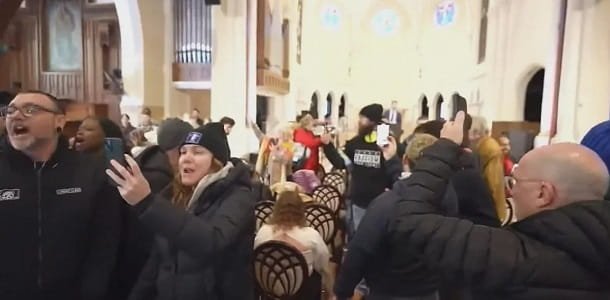
A religious institution has the same legal authority as any other private property owner to establish rules for conduct within its premises, to restrict access to members or invited guests, and to remove individuals who are behaving in ways that disrupt the institution’s activities or violate its policies. An individual who enters a church to conduct a protest — shouting during services, displaying signs, distributing literature in opposition to the church’s teachings, or otherwise disrupting religious worship — can be lawfully removed from the property by church officials, and if they refuse to leave, they can be arrested for criminal trespass under the laws of any U.S. state.
Criminal Trespass and Removal from Church Property
When a protester refuses to leave church property after being asked to do so by church officials or authorized representatives, the legal mechanism for their removal is criminal trespass. Every U.S. state’s criminal trespass statute applies to the situation where a person is asked to leave private property and refuses to comply. The refusal to depart after receiving notice to leave converts the presence on private property from a civil matter to a criminal offense in most states, typically classified as a misdemeanor for first offense with potential fines and jail time.
The private property nature of churches means that no amount of expressive purpose or political motivation for the protest changes the fundamental legal analysis — the First Amendment protects the protester’s right to express their views in public spaces and through other legal channels, but it does not compel a private religious institution to tolerate disruptive conduct on its premises or provide a platform for views hostile to its beliefs.
Disturbing Religious Worship: State Criminal Statutes
Beyond general trespass law, most U.S. states have enacted specific criminal statutes that address the willful disturbance or interruption of religious worship. These statutes — which have a long historical pedigree dating to the early American period when protecting religious assembly was considered a fundamental civil interest — specifically prohibit conduct that disrupts, disturbs, or interferes with a lawfully conducted religious service or assembly.
States with religious disturbance or disturbing worship statutes include California, Texas, Florida, New York, Georgia, and most others. These provisions typically require that the disturbance be willful — meaning intentional — and that it create an actual disruption to the religious assembly. A protest conducted inside a church during active religious services that involves shouting, displaying disruptive signs, or otherwise preventing the service from proceeding normally satisfies the elements of these statutes and can result in criminal misdemeanor charges against the protester.
The existence of these specific religious disturbance statutes reflects a legislative recognition that religious worship is a specifically protected activity deserving of legal protection from disruption beyond what general disorderly conduct provisions offer. Courts have upheld these statutes against First Amendment challenges, finding that the government’s interest in protecting peaceful religious assembly is a sufficiently compelling interest to justify restrictions on expressive conduct that disrupts it.
The Dobbs Decision and Church Protests: A Contemporary Example
The contemporary relevance of church protest law became particularly apparent following the Supreme Court’s June 2022 decision in Dobbs v. Jackson Women’s Health Organization, which overturned Roe v. Wade. In the weeks following the Dobbs decision, protests occurred at Catholic churches and other religious institutions that had supported the anti-abortion legal movement, and questions arose about the legal framework governing these demonstrations. The legal analysis confirmed the principle described above — protests on public sidewalks outside church properties were constitutionally protected, while entering church premises to disrupt religious services was subject to trespass and religious disturbance statutes.
The legal distinction between exterior sidewalk protests — where First Amendment protections are robust — and interior church protests — where private property and religious disturbance law govern — is the critical line that separates lawful public advocacy from criminal conduct in the church protest context.
Protests on Public Property Adjacent to Churches
While protesting inside a church without permission is not legally protected, protests conducted on public property adjacent to church premises are broadly protected by the First Amendment. Public sidewalks, streets, and public parks adjacent to church properties are traditional public forums where the First Amendment’s protections for expressive activity are at their strongest. Peaceful protesters who demonstrate on public sidewalks outside churches, display signs, distribute literature, or engage in other expressive activities from public property positions are exercising constitutionally protected rights that government cannot lawfully prohibit based on the content of their message.
Time, place, and manner restrictions — neutral regulations governing when, where, and how protests can be conducted — are permissible even in traditional public forums, allowing governments to impose permit requirements for large demonstrations, noise restrictions during nighttime hours, and crowd management measures that protect public safety without targeting specific viewpoints. These restrictions apply to church-adjacent protests as they would to any other public demonstration.
The Religious Institution’s Own First Amendment Rights
The legal analysis of church protests has an additional dimension — religious institutions themselves have First Amendment rights that protect their ability to exclude disruptive presences from their worship services. The Free Exercise Clause and the Establishment Clause together create a zone of religious autonomy that courts have been extremely reluctant to pierce through government regulation of internal religious affairs. A church’s authority to control its own worship services, exclude disruptive individuals, and maintain the sacred character of its religious activities is an expression of its First Amendment free exercise rights that the legal system protects with considerable force.
The Bottom Line on Protesting in a Church
Protesting inside a church without the institution’s permission is not a constitutionally protected activity because churches are private property where the First Amendment’s public forum protections do not compel access. Individuals who enter churches to disrupt religious services face criminal trespass charges if they refuse to leave and criminal charges under state religious disturbance statutes that specifically protect religious worship from willful interruption. Protests conducted on public property outside churches are broadly protected by the First Amendment as long as they comply with applicable time, place, and manner restrictions. The legal framework balances robust public forum protections for outside demonstrations with equally robust private property and religious freedom protections for the interior of houses of worship.