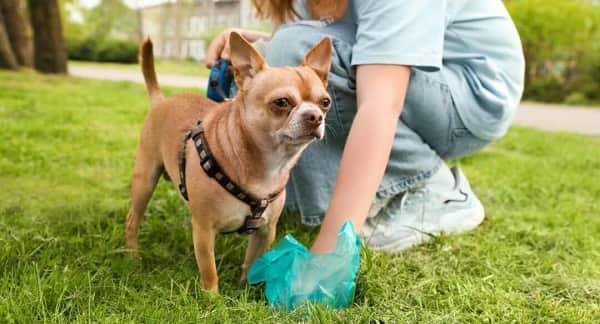
Dog ownership carries significant responsibilities in American law, and among the most commonly enforced — and most publicly significant — of these responsibilities is the obligation to clean up after your dog when it defecates in public spaces. The question of whether failing to pick up dog poop is illegal touches on municipal ordinances, public health regulations, property maintenance standards, and the broader social contract that governs the shared use of public and semi-public spaces in American communities. The answer is an unambiguous yes in the vast majority of American jurisdictions — failing to clean up after your dog in public is a civil infraction or misdemeanor offense subject to real fines and enforcement across the country.
The Universal Existence of Poop Scoop Laws
Pet waste pickup laws — commonly called pooper scooper laws or clean-up ordinances — exist in virtually every American city, county, and municipality that has significant dog ownership. These ordinances are among the most universally adopted pieces of local animal control and public health legislation in the country, reflecting the recognition that uncollected dog waste creates genuine public health hazards, degrades the quality of public spaces, and imposes unfair costs on neighbors and public agencies that must manage the resulting mess.
The adoption of these laws was not an inevitable historical development — pooper scooper laws are a relatively modern legal innovation. New York City pioneered mandatory pet waste cleanup legislation in 1978, becoming the first major American city to require dog owners to clean up after their animals. The New York City law — motivated by public health concerns and the very real degradation of city sidewalks and parks from accumulated dog waste — sparked a national wave of similar legislation that spread through American cities and suburbs over the following decades.
Today, pooper scooper laws or equivalent pet waste cleanup requirements exist in virtually every incorporated municipality in the United States and in many unincorporated areas through county ordinances. While there is no federal law requiring dog waste cleanup, the near-universal adoption of local ordinances creates a practical national standard that affects virtually every dog owner who takes their pet outside in populated areas.
What the Law Specifically Requires
The specific requirements of pet waste cleanup ordinances vary somewhat in their language but share a common core requirement — when a dog defecates on any public property or on private property without the property owner’s explicit permission, the person who is walking or in control of the dog is legally required to immediately collect and remove the waste.
Covered locations under most ordinances include public sidewalks and streets, public parks and recreational areas, public plazas and gathering spaces, school grounds and playgrounds, trails and greenways, and any other public property where dogs are allowed. Many ordinances also apply to private property other than the dog owner’s own property — meaning that a dog that defecates on a neighbor’s lawn requires the owner to clean it up even though the property is privately owned.
Equipment requirements are also common in many jurisdictions. Numerous city ordinances require dog owners to carry appropriate waste pickup equipment — plastic bags, a scoop, or similar tools — whenever they take their dog in public, on the grounds that the ability to comply with the cleanup requirement depends on having the means to do so. An officer who observes a dog owner walking without any cleanup supplies in hand has the basis for a citation in jurisdictions with carry requirements, even before any defecation incident occurs.
Penalties for Violations
The financial penalties for failing to pick up dog waste vary considerably across American jurisdictions, ranging from modest fines for first-time violations to substantial penalties for repeat offenders and egregious cases. Many cities impose fines in the range of fifty to one hundred dollars for a first offense, with escalating fines for subsequent violations — commonly rising to two hundred fifty to five hundred dollars for repeat offenders. Some jurisdictions impose community service requirements in addition to or instead of monetary fines, sometimes requiring offenders to perform cleanup work in the parks or public spaces affected by their violation.
New York City’s enforcement of its pooper scooper law is among the most aggressive in the country, with fines that can reach two hundred fifty dollars per violation. San Francisco, Chicago, Los Angeles, and most other major American cities maintain active enforcement programs that include dedicated animal control and parks enforcement officers who issue citations for observed violations.
Public Health and Environmental Rationale
The legal requirements for dog waste cleanup are grounded in genuine and well-documented public health concerns rather than mere aesthetic preferences. Dog feces contains a range of pathogens including bacteria — E. coli, Salmonella, Campylobacter — parasites — roundworms, hookworms, Giardia, Cryptosporidium — and viruses that pose real health risks to humans who come into contact with contaminated soil or water. Children who play on grass and soil where dog waste has been deposited face particular exposure risks, and the accumulation of dog waste near water bodies contributes to water quality degradation through nutrient loading and bacterial contamination.
The Environmental Protection Agency has classified pet waste as a nonpoint source pollutant in its water quality management framework, recognizing that accumulated pet waste in urban and suburban areas contributes measurably to the contamination of stormwater runoff and receiving water bodies. Several municipalities have incorporated pet waste management requirements into their stormwater pollution prevention programs as part of their Clean Water Act compliance obligations.
Apartment Buildings, Dog Parks, and HOA Rules
Beyond public ordinances, many private housing environments impose pet waste cleanup obligations through lease agreements, homeowners’ association rules, and community policies that operate independently of and in addition to municipal law. Apartment buildings with pet-friendly policies routinely include specific cleanup requirements in their lease addenda, and violations of these requirements can constitute grounds for lease termination in addition to any municipal fine liability.
HOA rules in planned communities and condominium associations frequently impose cleanup requirements for common areas and impose their own fine structures for violations that parallel or exceed municipal penalties. Dog parks — dedicated off-leash facilities in public parks — almost universally post and enforce cleanup requirements as a basic condition of use, and dog parks that experience chronic cleanup noncompliance face closure pressure from public health and parks authorities.
DNA Pet Waste Programs
An increasingly sophisticated enforcement approach adopted by some apartment communities and municipalities involves pet waste DNA testing programs through which dog owners register their pets’ DNA profiles in a database. When waste is found in a covered area, it can be DNA-tested and matched to the registered dog, allowing the owner to be identified and fined with high evidentiary certainty. These programs — offered by companies like BioPet Animal Lab and Poo Prints — have been adopted by hundreds of apartment communities and some municipalities as a way of dramatically improving enforcement rates for violations that traditionally went uncited because the violating owner was not directly observed.
The Bottom Line on Not Picking Up Dog Poop
Failing to pick up dog waste in public spaces is illegal in virtually every American jurisdiction under local pooper scooper ordinances and pet waste cleanup laws. Fines range from fifty dollars for first offenses to five hundred dollars or more for repeat violations in many cities. The public health rationale for these requirements is well-established and recognized by federal environmental agencies as a genuine water quality concern. Apartment leases, HOA rules, and dog park policies add private enforcement mechanisms on top of municipal law. DNA testing programs are increasingly being used to improve enforcement rates for violations that were historically difficult to cite. Dog owners throughout the United States should treat waste cleanup as a fundamental legal obligation, not merely a matter of courtesy — the legal and financial consequences of noncompliance are real and enforced with growing sophistication.