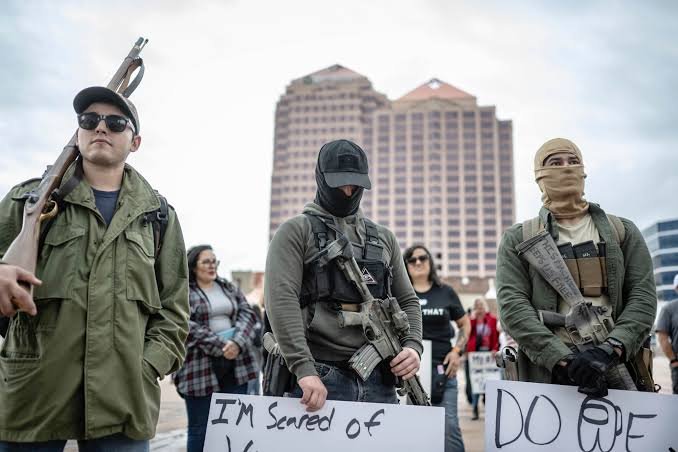
The intersection of Second Amendment rights and First Amendment rights creates one of the most legally complex and politically charged questions in contemporary American law — whether individuals can legally carry firearms to public protests, demonstrations, and political gatherings. The answer involves a careful analysis of federal constitutional law, state gun carry statutes, specific location-based prohibitions, and the rapidly evolving legal landscape that has emerged from landmark Supreme Court decisions on the right to bear arms. The short answer is that it depends heavily on the state, the specific location of the protest, and the manner in which the firearm is carried — but the legal framework is far more nuanced than a simple yes or no can capture.
The Second Amendment Foundation
The Second Amendment’s protection of the individual right to keep and bear arms was affirmed by the Supreme Court in District of Columbia v. Heller in 2008 and extended to the states through McDonald v. City of Chicago in 2010. The Court’s 2022 decision in New York State Rifle and Pistol Association v. Bruen dramatically expanded Second Amendment protections by striking down New York’s may-issue concealed carry permitting scheme and establishing that firearm regulations must be consistent with the historical tradition of firearms regulation in the United States. These decisions collectively create a strong constitutional baseline for individual gun rights that state and local governments must respect when regulating firearms at protests and public gatherings.
However, the Supreme Court has also acknowledged that the Second Amendment right is not unlimited. In Heller, Justice Scalia’s majority opinion specifically noted that the right to bear arms does not prohibit laws imposing conditions and qualifications on commercial sale of arms, nor does it forbid carrying firearms in sensitive places such as schools and government buildings. This sensitive places doctrine is one of the most legally significant and actively litigated aspects of post-Bruen gun law, and its application to protest environments is central to the legal analysis.
Open Carry vs. Concealed Carry at Protests
The legal treatment of bringing firearms to protests differs significantly depending on whether the gun is openly displayed or concealed on the person. Open carry laws and concealed carry laws reflect different legislative judgments about the appropriate balance between gun rights and public safety, and these distinctions directly affect the legality of armed protest participation.
States with permitless carry laws — including Texas, Florida, Georgia, Tennessee, Montana, and approximately half of all U.S. states — allow adults who can legally possess firearms to carry them openly or concealed without any government-issued permit. In these states, bringing a lawfully possessed firearm to a protest in a location that is not otherwise restricted is generally legal absent specific prohibitions that apply to the particular protest location.
States with permit-based carry systems require individuals to obtain a license or permit before carrying a concealed firearm in public. In these states, a licensed carrier who brings a concealed firearm to a protest in a legally accessible location is generally within their legal rights, while an unlicensed individual carrying concealed commits a criminal offense regardless of their participation in a protected First Amendment activity.
Location-Specific Restrictions That Affect Protest Gun Rights
Regardless of the state’s general carry framework, specific locations where protests frequently occur impose their own weapons restrictions that can prohibit firearms at demonstrations. State capitol buildings and grounds, federal buildings and federal property, courthouses, schools and school grounds, polling places on election days, and government office complexes are among the most commonly designated sensitive places where firearms are prohibited under both federal and state law.
Protests that occur at or near these locations — which include some of the most symbolically significant protest venues in American political life — place armed participants in direct legal jeopardy. A person who carries a firearm at a protest on the grounds of a state capitol building in a state that prohibits weapons on capitol grounds is committing a criminal violation regardless of the constitutional protection for both the firearm and the protest itself.
Many state legislatures have enacted specific provisions addressing firearms at political gatherings, election sites, and government facilities following high-profile incidents involving armed protests. Some states have enacted laws specifically prohibiting firearms at polling places and election-related events, and these provisions have survived initial constitutional challenges in federal courts applying the Bruen framework.
State Laws Specifically Addressing Armed Protest
Several states have enacted or attempted to enact specific laws addressing the presence of firearms at protests. California law prohibits bringing firearms to demonstrations, rallies, and public events in ways that go beyond the state’s general carry restrictions. New York’s revised concealed carry law following Bruen designated numerous public locations including demonstrations and protests as sensitive places where concealed carry is prohibited, though this specific designation has been the subject of ongoing litigation.
The critical legal tension in these state-specific protest gun laws is between the government’s interest in public safety at demonstrations that can become volatile and the constitutional protection for both the right to bear arms and the right to assemble and demonstrate. Federal courts applying the Bruen historical tradition test to these protest-specific restrictions have reached varying conclusions about which restrictions survive constitutional scrutiny, and the legal landscape continues to evolve through ongoing litigation.
Militia Laws and Paramilitary Organization Prohibitions
Many states have longstanding laws prohibiting private paramilitary organizations from conducting military drills and parades — provisions that predate the current Second Amendment debate and that have been applied to organized armed groups that appear at protests. These anti-paramilitary statutes address the organized, quasi-military display of armed groups at political events rather than the individual armed protester, but they create an additional legal consideration for groups that coordinate armed attendance at demonstrations.
Civil Liability and the Practical Consequences of Armed Protest
Beyond the criminal and constitutional framework, armed individuals who attend protests face significant civil liability exposure if their firearm is used or brandished in ways that contribute to injury or damage. A protest environment can rapidly escalate into confrontational situations, and an armed participant whose firearm contributes to an incident faces not only potential criminal charges but substantial civil liability to injured parties. Self-defense law requires proportionality and imminence of threat, and the crowded, confrontational atmosphere of some protests creates factual scenarios where the legal justification for firearm use is genuinely ambiguous.
The Bottom Line on Bringing a Gun to a Protest
The legality of bringing a gun to a protest depends on the state’s carry laws, the specific location of the protest, and whether any applicable sensitive place designations apply. Permitless and permit-based carry states allow armed protest attendance in locations that are not specifically designated as restricted. Government buildings, capitol grounds, federal property, polling places, and similar sensitive locations prohibit firearms regardless of the state’s general carry framework. State-specific protest gun laws are an evolving and actively litigated area of law. Civil liability and the practical dangers of firearms in protest environments create additional consequences beyond the criminal legal framework. Anyone who carries a firearm should be thoroughly familiar with every applicable restriction and should consult a firearms attorney for guidance specific to their state and the specific protest location involved.