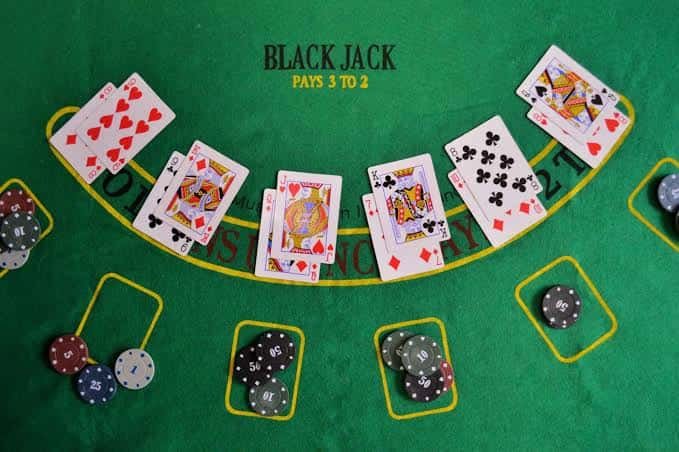
Las Vegas is the gambling capital of the United States and arguably the world, drawing tens of millions of visitors annually to its legendary casino floors. Among the many strategies that blackjack players have employed over the decades in pursuit of an edge over the house, card counting stands out as the most famous, most romanticized, and most misunderstood. Made famous by the MIT Blackjack Team, dramatized in films like 21, and debated endlessly in gambling circles, card counting raises a question that virtually every blackjack enthusiast eventually asks — is it actually illegal to count cards in Las Vegas? The answer, which surprises many people, is that card counting is completely legal under Nevada law and under the laws of every other U.S. state. However, the legal permissibility of card counting does not mean that casinos are powerless to respond to it, and understanding the full legal landscape requires examining both what the law permits and what casino private property rights allow.
Card Counting Is Not Illegal Under Nevada Law
Nevada Revised Statutes Title 41, which governs gaming in Nevada, defines cheating at gaming as altering or misrepresenting the outcome of a game, altering the elements of chance, or using any device or technique that would give a person an advantage that the casino has not authorized. Card counting — the mental practice of tracking the ratio of high-value to low-value cards remaining in a blackjack shoe by assigning values to cards as they are dealt — does not fit within this legal definition of cheating for a fundamental reason. Card counting does not alter any element of the game, does not involve any device or outside assistance, and does not change the cards dealt or the outcome of any hand. It is purely a mental exercise that uses information that is openly available to every player at the table — the cards that have already been played.
The Nevada Gaming Control Board, which is the regulatory authority responsible for overseeing all gaming activity in Nevada, has consistently taken the position that card counting is not cheating and is not a criminal offense under Nevada gaming law. This position has been upheld through the decades and reflects the fundamental legal principle that using one’s own intellect and memory to gain a strategic advantage in a game of skill is not the same as fraud, device use, or the manipulation of game outcomes that Nevada’s cheating statutes target.
The Nevada Supreme Court addressed this issue in a manner consistent with the general legal consensus — mental card counting does not constitute illegal cheating at gaming. The same legal conclusion has been reached in New Jersey, where the Uston v. Resorts International case addressed casino rights to exclude card counters and the New Jersey Supreme Court’s resolution of that case helped define the national legal framework for this issue.
Why People Believe Card Counting Is Illegal
The widespread belief that card counting is illegal in Las Vegas stems from the aggressive countermeasures that casinos deploy against suspected counters and the dramatic enforcement actions that accompany discovery of counting activity. When a Las Vegas casino suspects a player of card counting, the response can be swift and authoritative — casino security personnel approach the table, the pit boss intervenes, and the player is asked to leave or is told they can play any game in the casino except blackjack. The presence of uniformed security escorting a player from the building looks and feels like a law enforcement action, creating the impression that something illegal has occurred. In reality, the casino is exercising its private property rights rather than enforcing any criminal statute.
Private Property Rights: The Casino’s Legal Tools
Nevada casinos are private businesses with broad legal authority under private property law to exclude individuals from their premises for any non-discriminatory reason. Card counting is not a protected characteristic under anti-discrimination law — it is not a race, religion, national origin, disability, or other category that would prevent a business from making exclusion decisions based on it. A casino that identifies a card counter and asks them to leave is exercising the same fundamental property rights that any private business exercises when it removes an unwanted patron.
The trespass statutes of Nevada — like those of every other state — make it illegal to remain on private property after being asked to leave by the property owner or their authorized representative. When a Las Vegas casino formally bans a card counter from the property and that person returns, they are committing criminal trespass. The criminality is not in the card counting — it is in returning to private property after having been excluded. This is the mechanism through which professional card counters can face legal consequences, and it is entirely a function of private property law rather than gaming law.
Griffin Investigations and Casino Surveillance
The casino industry’s response to card counting over the decades evolved into a sophisticated infrastructure for identifying and tracking skilled players. Griffin Investigations, a private detective agency that operated for decades, maintained a database of suspected card counters that it shared with casino clients throughout the industry. This network allowed casinos to identify known counters from shared intelligence before they even sat down at a table. While Griffin Investigations eventually ceased operations following successful litigation by players who challenged their inclusion in its databases, the industry continues to use sophisticated surveillance, behavioral analysis, and facial recognition technology to identify and manage advantage players.
Countermeasures Short of Exclusion
Before resorting to exclusion, Las Vegas casinos have a range of countermeasures available to neutralize a card counter’s advantage while allowing the player to continue gambling. The most common is simply shuffling the deck more frequently — reducing penetration so that fewer cards are dealt before a shuffle limits the information available to a counter and reduces the depth of their advantage. Casinos can also limit the maximum bet a player can make, reducing the financial impact of bet spreading by a skilled counter. Using more decks in the shoe, dealing fewer cards before reshuffling, and employing automatic shuffling machines all reduce the effectiveness of card counting strategies.
The Bottom Line on Card Counting in Vegas
Card counting is completely legal in Las Vegas and under Nevada gaming law. The mental practice of tracking card values does not constitute cheating under Nevada’s gaming statutes and has never been successfully prosecuted as a criminal offense. However, Las Vegas casinos are private businesses with full legal authority to exclude card counters from their properties, and returning after exclusion constitutes criminal trespass. The criminality that professional card counters occasionally face flows entirely from trespass law triggered by returning to excluded properties — not from the counting itself.