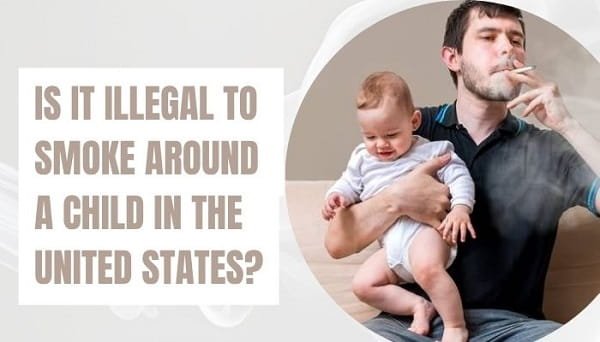
Secondhand tobacco smoke is one of the most extensively documented environmental health hazards in American public health literature. The U.S. Surgeon General, the Centers for Disease Control and Prevention, the American Academy of Pediatrics, and every major medical organization in the country have concluded that secondhand smoke causes serious harm to children, including increased risk of sudden infant death syndrome, respiratory infections, asthma, ear infections, and impaired lung development. Given the severity and breadth of these documented health consequences, the legal question of whether smoking around a child is illegal is one that many parents, grandparents, caregivers, and advocates have confronted in both policy and personal contexts. The legal reality is a patchwork of protections that varies dramatically depending on where the smoking occurs, who is present, and what state or locality’s laws apply.
No Federal Law Prohibiting Smoking Around Children
There is no federal statute that directly and comprehensively prohibits smoking around children in all circumstances. The federal government regulates tobacco products through the Family Smoking Prevention and Tobacco Control Act, which grants the FDA authority over tobacco product manufacturing and marketing — but federal tobacco law does not extend to regulating individual adult behavior in private settings. Federal workplace safety regulations administered by OSHA address occupational smoke exposure in workplace settings, and federal regulations specifically prohibit smoking in certain federally regulated environments, but a comprehensive federal prohibition on smoking around children in private spaces does not exist.
State Laws Protecting Children From Secondhand Smoke
At the state level, the legal framework for protecting children from secondhand smoke has developed significantly over the past two decades, driven by growing medical evidence and strengthening public health advocacy. State protections fall into several distinct categories based on where the smoking occurs and the legal relationship between the adult smoker and the child.
Several states have enacted laws specifically prohibiting smoking in vehicles when children are present. These laws are among the most directly enforceable child smoke exposure protections because a vehicle stop provides law enforcement with a clear opportunity to observe the violation and issue a citation. States with vehicle smoking bans when minors are present include California, Louisiana, Maine, Arkansas, Oregon, Utah, Vermont, Virginia, and Puerto Rico, among others. These laws vary in the specific age thresholds for the protected minor — some protect children under 13, others under 18 — and in the penalties they impose, which range from modest fines to more significant civil penalties.
California’s vehicle smoking ban covers children under 18 and is enforced as a secondary violation — meaning officers can cite a driver for the smoking violation only if they have already stopped the vehicle for another infraction. Louisiana, Maine, and several other states enforce their vehicle smoking bans as primary violations, allowing officers to stop and cite drivers specifically for smoking with a child present.
State Child Abuse and Neglect Frameworks
Beyond specific smoking statutes, the broader child abuse and neglect frameworks that exist in every U.S. state create potential legal exposure for caregivers whose smoking exposes children to serious health harm. While no state has specifically enumerated secondhand smoke exposure as per se child abuse or neglect, child protective services agencies in multiple states have factored chronic smoke exposure into neglect determinations in cases involving children with significant respiratory conditions, asthma, or other documented medical vulnerabilities.
Courts in family law and custody proceedings have gone further, with judges in numerous states issuing custody and visitation orders that prohibit smoking around children, particularly children with documented medical conditions that are exacerbated by smoke exposure. These court orders are civil rather than criminal in nature, but violation of a court order prohibiting smoking around children can constitute contempt of court — a serious legal consequence with potential fines and imprisonment.
Smoke-Free Housing and Multi-Unit Dwellings
The legal framework around smoking in residential settings has expanded significantly with the growth of smoke-free housing policies. HUD has required public housing authorities to adopt smoke-free policies for all public housing units since 2018, making it illegal to smoke anywhere in federally funded public housing — including in private apartment units and common areas. This federal requirement directly protects children living in public housing from secondhand smoke in their homes.
Many states and local governments have enacted laws permitting or requiring landlords of multi-unit residential buildings to adopt smoke-free policies, and some jurisdictions have enacted outright prohibitions on smoking in multi-unit housing common areas or even within individual units. These smoke-free housing provisions protect children living in apartment buildings from secondhand smoke that migrates between units through ventilation systems, walls, and shared spaces.
Custody and Family Court Orders
Family courts across the United States have increasingly incorporated smoking restrictions into custody and visitation agreements and orders, reflecting the judicial recognition that exposing children to secondhand smoke is a health risk that courts have authority to address in the best interest of the child. Judges have ordered parents to refrain from smoking in the presence of their children, to not smoke within a specified time period before exercising custody, and to ensure that any caregiver who has the child also refrains from smoking. These orders are particularly common in cases involving children with asthma, respiratory conditions, or other medical vulnerabilities, but courts have also issued smoking restrictions for otherwise healthy children on general best-interests grounds.
Daycare and Childcare Settings
Federal and state regulations governing licensed childcare facilities specifically prohibit smoking in daycare centers, preschools, and other licensed childcare settings. These regulations protect children in institutional care from smoke exposure during the hours they spend in childcare facilities and impose licensing consequences on providers who violate smoke-free requirements. The prohibition extends to smoking anywhere on the premises of a licensed childcare facility, including outdoor play areas and parking lots in many jurisdictions.
The Bottom Line on Smoking Around Children
Smoking around children is illegal in specific, defined circumstances across a growing number of U.S. states and localities — most notably in vehicles when children are present, in public housing, in licensed childcare facilities, and pursuant to family court orders in custody situations. No federal law or universal state law prohibits all instances of smoking around children, but the legal framework protecting children from secondhand smoke has expanded significantly in recent decades and continues to grow as public health awareness and legislative momentum build. Parents and caregivers who smoke around children with documented health conditions face the greatest legal exposure under existing child welfare frameworks, and family courts have shown increasing willingness to impose smoking restrictions as a matter of children’s best interests regardless of specific statutory prohibitions.