The legal fight involving Meta Platforms and Google has quickly become one of the most talked-about tech stories of 2026. At its core, this lawsuit is not just about money or one individual case. It is about how modern social media platforms are designed, how they affect young users, and whether big tech companies should be held responsible for that impact.
Let’s break it down in a simple, clear way.
What Is the Lawsuit About?
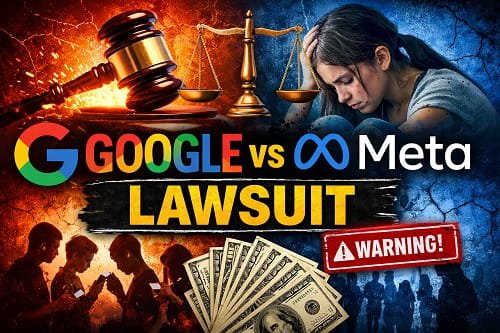
The lawsuit centers on a serious allegation: that platforms like Instagram, Facebook, and YouTube are intentionally designed to be addictive, especially for children and teenagers.
A recent U.S. court case brought this issue into the spotlight. A young woman claimed that she became heavily addicted to social media at a young age. According to her case, this addiction led to mental health struggles such as anxiety, depression, and self-harm.
The jury agreed with her argument. Both Meta and Google were found responsible and ordered to pay damages. This decision is being seen as a major shift because, until now, tech companies were rarely held liable for how users interact with their platforms.
Why Are Meta and Google Being Blamed?
The focus of the lawsuit is not just on content, but on design features. Lawyers argue that these platforms are built in a way that keeps users hooked for as long as possible.
Some of the key features under scrutiny include:
- Infinite scrolling that never ends
- Autoplay videos that keep playing without user action
- Notifications that constantly pull users back
- Like and share systems that trigger dopamine responses
The claim is simple: these features are not accidental. They are carefully designed to maximize user engagement, even if it harms mental health over time.
What Do the Companies Say?
Both Meta Platforms and Google strongly deny these allegations.
Their defense is based on a few key points:
- Mental health issues are complex and cannot be blamed on one factor
- Millions of people use these platforms without harm
- They already provide safety tools like screen-time controls and parental settings
They also argue that holding them responsible could set a dangerous precedent, where companies are blamed for how individuals use their products.
Both companies are expected to challenge the court’s decision through appeals.
Why This Case Is a Big Deal
This lawsuit is being described as a turning point for the tech industry, and for good reason.
For years, companies like Meta and Google have been protected under laws that limit their responsibility for user-generated content. But this case shifts the focus from content to product design.
That is a big change.
If courts continue to rule this way, tech companies may be treated more like manufacturers. Just like a car company can be held responsible for faulty design, social media companies could be held responsible for harmful platform features.
Some experts are even comparing this moment to the tobacco lawsuits of the 1990s, when cigarette companies were finally held accountable for health risks.
What Could Change After This?
If more cases follow this pattern, we could see real changes in how social media platforms work.
Here are some possible outcomes:
- Design Changes
Platforms may reduce addictive features. For example, limits on infinite scroll or fewer push notifications. - Stronger Regulations
Governments could introduce stricter rules, especially for protecting minors online. - More Lawsuits
This case may encourage thousands of similar claims from users around the world. - Transparency Requirements
Companies might be forced to reveal how their algorithms work and how they influence user behavior.
What It Means for Users
For everyday users, especially teenagers, this case could lead to a healthier digital environment over time.
Apps might become less aggressive in trying to grab attention. There could be more built-in tools to control usage. Parents may also get better controls to monitor their children’s activity.
However, change will not happen overnight. Legal battles like this take years, and companies will fight hard to protect their current business models.
The Bigger Picture
It’s important to understand that this is not just one isolated case. The “Google–Meta lawsuit” is part of a larger global conversation about:
- Social media addiction
- Online safety for children
- Data privacy
- Ethical use of algorithms
Governments in many countries are already watching closely. What happens in these U.S. courts could influence laws and policies worldwide, including in India.
Final Thoughts
The lawsuit against Meta Platforms and Google marks a new phase in the relationship between technology and society.
For the first time, courts are seriously questioning not just what these platforms host, but how they are built.
Whether this leads to safer, more responsible social media or simply a long legal battle remains to be seen. But one thing is clear: the era of Big Tech operating without strong accountability is slowly coming to an end.