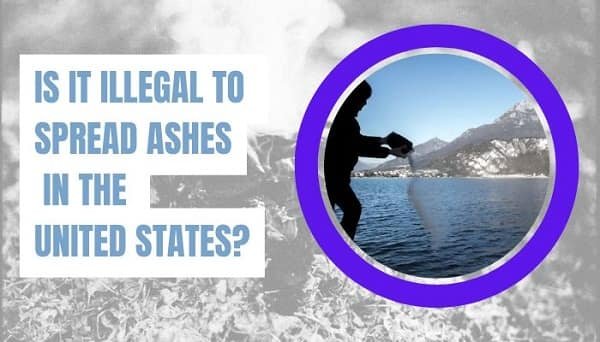
The scattering of cremated remains — commonly referred to as spreading ashes — has become an increasingly popular choice among Americans who wish to memorialize their loved ones in meaningful natural settings. Whether it is releasing ashes over the ocean, scattering them in a beloved mountain meadow, or dispersing them in a park that held special significance, the desire to return a person’s remains to the natural world is deeply human and widely shared. But the legal framework governing where and how ashes can be spread in the United States is more complex than most families realize, involving federal regulations, state laws, local ordinances, and private property rights that vary significantly depending on where the scattering takes place.
What Are Cremated Remains Under the Law?
Before examining the specific legal rules, it is important to understand how the law classifies cremated remains. Cremated remains — commonly called ashes, though they are technically processed bone fragments — are not classified as hazardous waste or biohazardous material under federal or state environmental regulations. They do not pose a documented public health risk, and their chemical composition — primarily calcium phosphate and other minerals — is similar to naturally occurring materials in soil and water. This classification has important legal implications, because it means that the spreading of cremated remains does not implicate the environmental contamination and hazardous waste disposal laws that might otherwise restrict where biological materials can be released.
Federal Law: EPA and Ocean Scattering
The most directly applicable federal law governing the scattering of ashes in specific environments is the Marine Protection, Research, and Sanctuaries Act — commonly known as the Ocean Dumping Act — and its implementing regulations administered by the Environmental Protection Agency. Under EPA regulations implementing this statute, the burial of human remains at sea — including the scattering of cremated remains — is permitted without a permit, provided that the scattering occurs at least three nautical miles from land.
Beyond the three-mile distance requirement, EPA regulations for ocean scattering of ashes require that the family notify the EPA within 30 days of scattering — a simple reporting requirement that can be completed online through the EPA’s reporting portal. The notification requires basic information including the date, location coordinates, and amount of remains scattered. This notification requirement is not widely known, and failure to comply is technically a regulatory violation, though enforcement against individual families for non-notification is essentially nonexistent.
The three-nautical-mile rule applies to coastal ocean waters. Rivers, lakes, and other inland water bodies are governed by separate state environmental regulations rather than the federal ocean dumping framework, and the rules for freshwater scattering vary considerably by state.
Scattering on Public Land: National Parks and Federal Lands
National parks present one of the most commonly requested but legally complex settings for ash scattering. Millions of Americans have strong personal connections to national parks, and the desire to scatter a loved one’s ashes in a cherished park setting is entirely understandable. However, the National Park Service’s policies on ash scattering vary from park to park, and some parks require permits while others prohibit scattering entirely in certain areas.
The general NPS policy is that ash scattering may be permitted in specific locations within parks under certain conditions, but families must contact the individual park’s superintendent for guidance and obtain any necessary authorization before proceeding. Parks that permit ash scattering typically require that it occur in remote areas away from developed facilities, visitor areas, and water sources, and that families ensure the ashes are fully dispersed rather than deposited in visible piles.
Bureau of Land Management lands and National Forest lands generally take a more permissive approach to ash scattering, with no formal permit requirement in most cases for scattering in undeveloped areas away from water sources and high-traffic areas. However, families should contact the relevant land management office before scattering to confirm that no specific local restrictions apply.
State Laws on Ash Scattering
State laws governing ash scattering vary considerably, with some states having detailed regulations and others leaving the matter largely unaddressed by statute. California has some of the most detailed state regulations for ash scattering, requiring that scattering at sea occur beyond 500 yards from the shoreline and that scattering on land occur in areas where it will not create a public health hazard or a nuisance. California also allows scattering on private property with the property owner’s consent and in designated cemetery scattering gardens.
States with coastal waters have varying rules about how close to shore scattering can occur, and some states require permits for water scattering that the federal EPA framework does not independently require. Inland states with lakes, rivers, and other water bodies have environmental regulations governing water quality that can restrict ash scattering in sensitive aquatic ecosystems, near public water intakes, or in areas with specific conservation designations.
Private Property and Permission Requirements
Scattering ashes on private property without the property owner’s permission constitutes trespass under the laws of every U.S. state. Many families wish to scatter ashes on land that held personal significance — a childhood home, a family farm that has since been sold, a favorite hiking trail on private land — and the legal requirement to obtain permission before entering private property to scatter ashes applies equally to these well-intentioned situations. Property owners who grant permission for ash scattering on their land are performing a generous act that is legally permissible, and families should always seek explicit consent before proceeding.
Practical Considerations and Best Practices
Families planning ash scattering should research the specific rules for their chosen location well in advance, contact relevant land management agencies for public lands, obtain written permission for private property scattering, comply with any applicable permit or notification requirements, choose locations away from water sources and developed areas when on public land, and ensure that the method of scattering disperses the remains fully rather than creating concentrated visible deposits.
The Bottom Line on Spreading Ashes
Spreading ashes is legal in many circumstances in the United States, but the specific rules governing where and how depend on the location. Ocean scattering is federally regulated with a three-mile minimum distance and EPA notification requirement. National parks and federal lands have varying policies requiring advance contact and sometimes permits. State laws impose additional requirements for water scattering. Private property requires permission. Families who plan thoughtfully and respect the applicable regulatory framework can legally and meaningfully honor their loved ones through ash scattering in a wide range of settings.