Mushrooms occupy one of the most legally complex positions in American agriculture and controlled substance law. The answer to whether growing mushrooms is legal depends entirely on the species of mushroom being cultivated, the purpose of cultivation, and the jurisdiction where the growing occurs. The vast majority of mushroom species — culinary varieties, medicinal varieties, and specialty fungi — are perfectly legal to grow throughout the United States and represent a rapidly growing segment of American agriculture and home gardening. However, a specific category of mushrooms containing the controlled substance psilocybin creates a legal framework that makes cultivation of those species a serious federal felony, with important state-level developments complicating the picture in specific jurisdictions.
Legal Mushroom Cultivation: The Agricultural and Culinary Framework
Growing edible and medicinal mushrooms is entirely legal throughout the United States and is encouraged by federal and state agricultural agencies as a legitimate and increasingly important sector of American food production. Gourmet and specialty mushroom cultivation — including oyster mushrooms, shiitake mushrooms, lion’s mane mushrooms, king trumpet mushrooms, and dozens of other edible species — has grown dramatically in recent years as consumer demand for locally produced specialty foods has increased.
Home mushroom cultivation using commercially available grow kits, substrate blocks, and spore syringes for legal species is a popular hobby that requires no permits, licenses, or government authorization. Commercial mushroom farming operates within the standard framework of agricultural regulation — food safety compliance, facility sanitation standards, and labeling requirements — without any mushroom-specific legal barriers. The USDA’s National Organic Program covers organically certified mushroom production under the same framework that applies to other organic agricultural products.
Medicinal mushroom species including reishi, turkey tail, chaga, cordyceps, and lion’s mane are legal to grow and are widely cultivated for the supplement and functional food markets. These species are not controlled substances and face no cultivation restrictions beyond the standard agricultural and food safety framework applicable to all edible fungi.
Psilocybin Mushrooms: Federal Controlled Substance Status
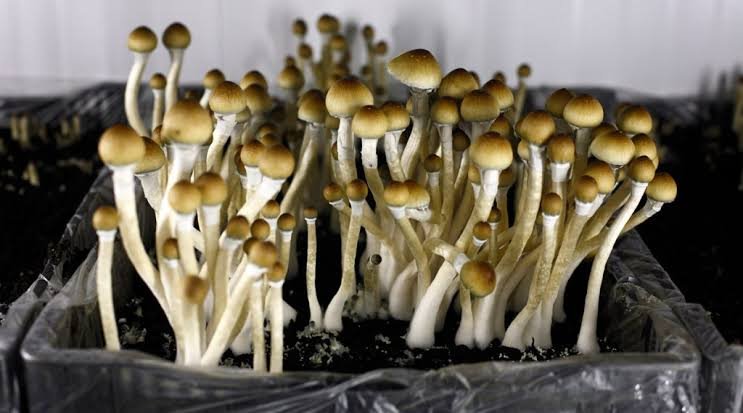
The legal framework changes completely when the mushrooms in question are psilocybin-containing species — commonly called magic mushrooms, psychedelic mushrooms, or shrooms. Psilocybin — the primary psychoactive compound in these mushrooms — is classified as a Schedule I controlled substance under the federal Controlled Substances Act. The Schedule I classification means that psilocybin is considered to have no currently accepted medical use and a high potential for abuse, placing it in the same regulatory category as heroin and making its manufacture, distribution, and possession federal crimes.
Under the Controlled Substances Act, manufacturing a controlled substance — which includes growing plants or fungi that produce Schedule I compounds — is a federal felony. Cultivating psilocybin mushrooms constitutes manufacturing psilocybin under federal drug law. This federal manufacturing charge carries significant criminal penalties — a first offense for manufacturing a Schedule I substance can result in up to twenty years in federal prison and fines of up to one million dollars. Subsequent offenses carry even more severe penalties.
The federal manufacturing analysis applies to the growing of any fungi that produce psilocybin, including Psilocybe cubensis, Psilocybe semilanceata, Psilocybe azurescens, and the numerous other species in the Psilocybe genus and related genera that contain psilocybin as a metabolic product.
The Spore Sale Legal Grey Zone
One of the most discussed legal complexities in psilocybin mushroom law involves the sale and possession of psilocybin mushroom spores. Spores — the reproductive cells of fungi — do not themselves contain psilocybin, as psilocybin is only produced when the fungus develops into mature mushroom tissue. This biological fact has created a legal grey zone in which psilocybin mushroom spores are sold openly in most states under the rationale that the spores themselves are not controlled substances.
In the vast majority of U.S. states, possession and sale of psilocybin mushroom spores is technically legal because the spores do not contain scheduled substances. Online vendors sell spore syringes and spore prints marketed for microscopy and research purposes in states where doing so is not specifically prohibited. However, the moment these spores are used to cultivate mushrooms that produce psilocybin, the cultivation activity constitutes federal manufacture of a controlled substance regardless of the legal status of the spores themselves. Using legally purchased spores to grow psilocybin mushrooms does not provide any legal protection against federal manufacturing charges.
California, Georgia, and Idaho specifically prohibit the possession of psilocybin mushroom spores under their state drug laws, closing the grey zone that exists in other states and making spore possession itself a state criminal offense in those jurisdictions.
State Decriminalization and Legalization Developments
The legal landscape for psilocybin mushrooms at the state level has been evolving rapidly as several states have moved toward decriminalization or regulated therapeutic use frameworks. Oregon passed Measure 109 in 2020, creating the first state-level framework for regulated therapeutic psilocybin services. Oregon’s framework authorizes licensed facilities to administer psilocybin to adult clients under the supervision of licensed facilitators for therapeutic purposes. Colorado passed Proposition 122 in 2022, establishing a similar framework for regulated psilocybin therapy and creating a process for licensed cultivation.
Beyond these state-level regulatory frameworks, numerous cities have adopted decriminalization measures that reduce or eliminate local law enforcement priorities for psilocybin mushroom offenses. Denver was the first city to decriminalize psilocybin mushrooms in 2019. Ann Arbor, Seattle, Portland, Oakland, Santa Cruz, Detroit, and several other cities have adopted similar decriminalization measures that instruct local law enforcement to deprioritize enforcement of psilocybin offenses.
These state and local developments create a complex legal landscape where activity that remains a federal felony may be decriminalized at the state or local level. Decriminalization does not eliminate federal criminal liability — federal law enforcement retains jurisdiction to prosecute psilocybin offenses regardless of state decriminalization policies, and individuals who grow psilocybin mushrooms in decriminalized states remain at risk of federal prosecution even if state and local enforcement has been reduced.
The Research and Medical Context
The federal Schedule I classification of psilocybin creates a complete barrier to legal cultivation for personal use or commercial sale outside of specifically authorized research contexts. Researchers who wish to study psilocybin mushrooms must obtain Schedule I researcher licenses from the DEA and comply with comprehensive federal research protocols governing the handling, storage, and use of Schedule I substances. Several major universities and research institutions have obtained the necessary federal authorizations to conduct legitimate psilocybin research, but these authorizations are specifically limited to the research context and do not authorize cultivation for any other purpose.
The Bottom Line on Growing Mushrooms
Growing legal edible, culinary, and medicinal mushroom species is entirely legal throughout the United States and represents a thriving sector of American agriculture and home gardening. Growing psilocybin-containing mushrooms is a federal felony under the Controlled Substances Act’s prohibition on manufacturing Schedule I controlled substances, carrying potential sentences of up to twenty years in federal prison. State decriminalization measures in Oregon, Colorado, and several cities reduce local enforcement priorities but do not eliminate federal criminal liability. Spore possession occupies a technical legal grey zone in most states but provides no protection against federal manufacturing charges when used for cultivation. The legal framework firmly distinguishes between the vast universe of legal mushroom species and the specifically prohibited psilocybin-containing species that remain Schedule I controlled substance manufacturers under federal law.