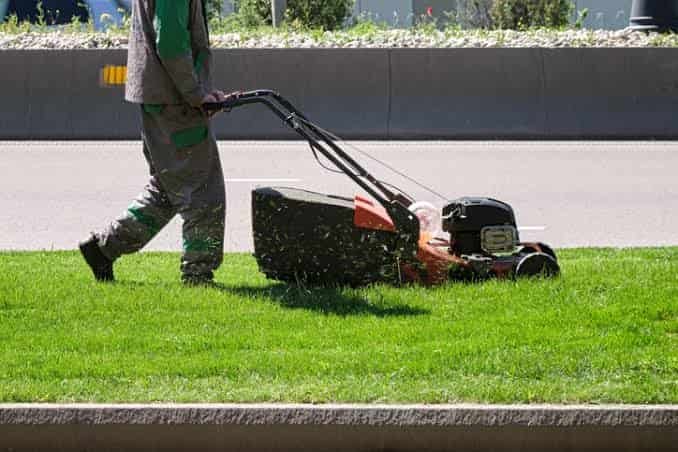
Lawn maintenance is among the most routine and universally practiced activities in American residential and commercial life. Tens of millions of Americans mow their lawns every week during the growing season, and the question of where the resulting grass clippings end up — whether left on the lawn, collected in bags, or blown onto adjacent roads, driveways, and sidewalks — has become a surprisingly significant legal issue in numerous states across the country. The practice of blowing or directing grass clippings onto public roads is not merely an issue of courtesy or neighborhood etiquette — in many U.S. states, it is specifically prohibited by law, and the consequences of doing so can include substantial fines and even criminal charges.
Why Grass Clippings on Roads Are Legally Regulated
Before examining the specific legal framework, understanding why grass clippings on roads have attracted legislative attention helps clarify the policy objectives behind the various state and local regulations. Grass clippings on public roads create several distinct public safety and environmental hazards that have motivated legislators to act.
The most significant safety concern is motorcycle hazard. Grass clippings deposited on road surfaces create a slippery layer that dramatically reduces traction for motorcycles and bicycles, and motorcycle crashes directly attributable to grass clippings on road surfaces have been documented and fatal in multiple states. The Motorcycle Safety Foundation and motorcycle advocacy organizations have been among the most vocal proponents of grass clipping road prohibition laws, and their advocacy has directly contributed to the passage of legislation in several states.
Environmental concerns provide a second significant regulatory motivation. Grass clippings washed into storm drains and waterways contribute excessive nitrogen and phosphorus to aquatic systems — nutrients that fuel algal blooms, deplete dissolved oxygen, and contribute to the eutrophication of lakes, rivers, and coastal waters. Environmental agencies across the country have identified lawn clippings as a meaningful nonpoint source of nutrient pollution, and regulatory efforts to keep clippings out of storm drains reflect genuine environmental protection objectives.
State Laws Specifically Prohibiting Grass Clippings on Roads
Several U.S. states have enacted specific statutory provisions that prohibit blowing or depositing grass clippings onto public roads. These state-level prohibitions represent some of the clearest and most directly enforceable legal restrictions on the practice.
Wisconsin enacted one of the earliest and most well-known state laws specifically prohibiting the deposit of grass clippings on public roads. Wisconsin Statute Section 346.94 prohibits depositing grass clippings on a highway and classifies violations as civil traffic forfeitures with significant fines. Wisconsin’s law was motivated substantially by motorcycle safety concerns following documented crashes caused by clipping-covered road surfaces, and it has been held up as a model for other states considering similar legislation.
Tennessee has enacted similar prohibitions through its highway regulations, making it illegal to deposit grass clippings or other organic debris onto public road surfaces. North Carolina’s litter and debris laws address grass clippings as a category of material that cannot be deposited on public roads. Several other states have addressed grass clippings through their general litter, debris, or roadway obstruction statutes even if they have not enacted grass-specific provisions.
Local Ordinances and Municipal Regulations
Even in states without specific statewide prohibitions on grass clippings in roads, many municipalities have enacted local ordinances that specifically address the practice. Local public works departments, city councils, and county commissions have recognized the motorcycle safety hazard and storm drain contamination issues that grass clippings create and have enacted ordinances prohibiting the deposit of clippings on public roads within their jurisdictions.
These local ordinances vary in their specific provisions and enforcement approaches, but they commonly prohibit directing lawn mowers, leaf blowers, or other equipment in a manner that deposits grass clippings onto adjacent public road surfaces. Enforcement of local grass clipping ordinances is typically handled by code enforcement officers, public works departments, or local police depending on the municipality’s specific regulatory framework.
Littering Laws and Their Application to Grass Clippings
In states and localities without specific grass clipping road prohibitions, general littering and debris laws can apply to the deposit of grass clippings on public road surfaces. Virtually every state has a littering statute that prohibits depositing waste, debris, or refuse on public roads, and grass clippings have been treated as debris subject to these provisions in enforcement actions across the country.
The application of general littering statutes to grass clippings is not without legal complexity — some defendants have argued that grass clippings are a natural material rather than litter within the meaning of littering statutes, and courts have reached varying conclusions about whether specific state littering provisions clearly encompass organic landscape waste. However, the trend in enforcement and judicial interpretation has generally supported treating the deposit of significant quantities of grass clippings on public roads as a littering violation subject to applicable fines.
Storm Drain and Environmental Regulations
The environmental dimension of grass clipping road deposit creates a separate category of regulatory exposure beyond traffic safety and littering laws. Many states and municipalities have enacted storm drain protection ordinances that prohibit depositing any material that could be washed into storm drains and cause water quality impairment. These provisions are often part of the regulatory framework implementing the Clean Water Act’s requirements for managing nonpoint source pollution.
Lawn care professionals and landscaping companies that regularly direct grass clippings onto road surfaces may face environmental compliance issues under these storm drain protection provisions in addition to any traffic safety or littering violations. Commercial operators with recurring violations face more aggressive enforcement attention than individual homeowners, reflecting the greater cumulative environmental impact of commercial landscape maintenance operations.
Civil Liability for Motorcycle and Bicycle Crashes
Beyond regulatory enforcement, the deposit of grass clippings on road surfaces creates civil liability exposure for property owners and lawn care operators whose clippings contribute to motorcycle or bicycle crashes. When a motorcyclist or bicyclist crashes on a grass-covered road surface and investigation reveals that recently deposited lawn clippings contributed to the loss of traction, the property owner or lawn care operator whose mowing deposited the clippings may face a negligence lawsuit for the resulting injuries.
Motorcycle crash cases involving grass clippings have resulted in significant civil judgments against property owners in multiple states, establishing that depositing grass on road surfaces is a form of negligence that creates foreseeable risk of harm to riders. These civil liability outcomes provide a powerful economic incentive to keep clippings off roads even in jurisdictions without specific regulatory prohibitions.
Best Practices for Lawn Care and Legal Compliance
Lawns that are mowed toward the property rather than toward the road, mower discharge chutes that direct clippings inward rather than outward, mulching mower attachments that return clippings to the lawn, and the collection and composting or disposal of clippings in accordance with local solid waste regulations all represent both legally compliant and ecologically responsible approaches to grass clipping management.
The Bottom Line on Blowing Grass in the Road
Blowing grass clippings onto public roads is specifically prohibited by statute in several states including Wisconsin and Tennessee and by local ordinance in numerous municipalities across the country. In states without specific prohibitions, general littering and debris laws and storm drain protection ordinances provide legal hooks for enforcement. Civil liability for motorcycle and bicycle crashes caused by road-deposited clippings provides additional legal exposure. The safety, environmental, and legal case against blowing grass onto public roads is compelling, and directing clippings away from road surfaces is both the legally safest and ecologically responsible approach to lawn maintenance.