With the rising cost of housing, the growth of the van life movement, long-distance road trips, and the realities of financial hardship, a growing number of Americans find themselves sleeping in their vehicles at some point. Whether by choice or necessity, sleeping in a car is a common practice — and one that many people are surprised to discover occupies a complex and inconsistent legal landscape across the United States. The short answer is that sleeping in your car is not categorically illegal anywhere in the United States, but whether it is legal in any specific circumstance depends heavily on where you are parked, local ordinances, state law, and whether other factors like alcohol consumption are involved.
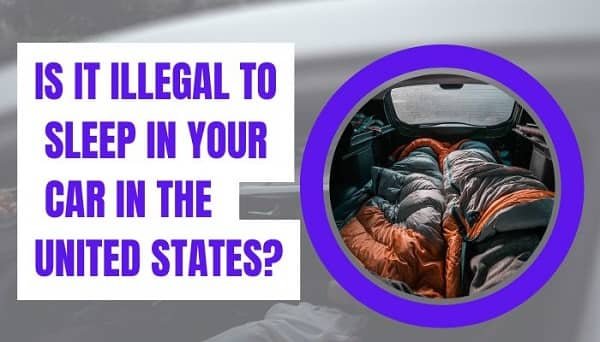
No Federal Law Prohibits Sleeping in a Vehicle
There is no federal law that prohibits a person from sleeping in their car. The federal government has not legislated on this specific topic, leaving the question entirely to state and local law. This means that the legality of sleeping in your car is determined by a patchwork of state statutes, county ordinances, city codes, and the regulations of specific property owners and land managers — creating a situation where the practice may be perfectly legal in one location and a citable offense just a few blocks away.
State Laws and Sleeping in Vehicles
At the state level, most states do not have a specific statute that prohibits sleeping in a parked vehicle as a general matter. However, several states have laws that indirectly restrict the practice. California, which has the largest homeless population in the country and has been at the center of debates over vehicle dwelling, has seen ongoing legal battles between cities seeking to restrict overnight vehicle habitation and advocates arguing that such restrictions are unconstitutional when applied to people who have no alternative housing.
The most significant state-level restriction on sleeping in a vehicle involves drunk driving statutes. In several states — including California, Texas, and others — a person found sleeping in their car while intoxicated can be charged with driving under the influence or driving while intoxicated even if they are not actively driving. The legal theory is that a person who is intoxicated and in physical control of a vehicle — meaning they have access to the keys and the ability to operate it — poses a potential risk to public safety regardless of whether the vehicle is in motion. Physical control DUI cases are highly fact-specific, with courts examining factors including whether the engine was running, where the keys were located, whether the person was in the driver’s seat, and whether there was any evidence of recent driving.
Municipal Ordinances: Where the Law Gets Complicated
The most significant restrictions on sleeping in cars come at the municipal level, where cities and counties have enacted a wide variety of ordinances addressing overnight vehicle habitation. These ordinances vary enormously in their scope, targeting everything from overnight parking in residential neighborhoods to camping in vehicles on public streets to extended habitation of vehicles in commercial parking areas.
Many cities have enacted specific anti-vehicle habitation ordinances that prohibit people from using a vehicle as a primary residence or overnight sleeping location within city limits. Los Angeles, San Diego, Seattle, Denver, and numerous other cities have enacted or attempted to enforce such ordinances, with varying degrees of legal success. The constitutional limits on these ordinances have been extensively litigated, particularly in the Ninth Circuit, where courts have grappled with the question of whether criminalizing sleeping in a vehicle when a person has no housing alternative violates the Eighth Amendment’s prohibition on cruel and unusual punishment.
Where Sleeping in Your Car Is Generally Acceptable
Despite the patchwork of local restrictions, there are many locations across the United States where sleeping in your car is broadly accepted and legally unproblematic. Walmart parking lots have long had an informal reputation as welcoming to overnight car and RV sleepers, though individual store policies vary and have become more restrictive in recent years. Rest areas along Interstate highways generally permit overnight parking for a limited period — typically eight to ten hours — and are designed in part to allow fatigued drivers to rest safely before continuing. Designated campgrounds and RV parks obviously permit vehicle overnight stays by their very nature and purpose.
National forests and Bureau of Land Management (BLM) lands offer extensive dispersed camping opportunities where sleeping in a vehicle is entirely legal, often at no cost, subject to the specific regulations of each land unit. Casino parking lots in states with tribal gaming frequently welcome overnight vehicle stays. Many truck stops accommodate overnight sleepers in their parking areas, particularly for travelers on long-distance trips.
Private Property and Trespass Considerations
When sleeping in a car on private property, the fundamental legal consideration is whether you have permission to be on that property. Sleeping in a car in a private parking lot without the property owner’s permission can constitute trespass, and property owners or security personnel can require you to leave. If you refuse to leave after being asked to do so, the trespass becomes criminal in most states. Shopping mall parking lots, commercial parking structures, and private business parking areas all involve private property rights that the owner can enforce.
Practical Legal Risks and Law Enforcement Interactions
Even in situations where sleeping in your car is technically legal, law enforcement officers have broad discretion to approach vehicles and conduct welfare checks on occupants. Officers who observe someone sleeping in a vehicle may knock on the window to confirm the person is safe, check for signs of intoxication, or run the vehicle’s license plates to check for outstanding warrants. These interactions are generally lawful as community caretaking functions, even without specific suspicion of criminal activity. The outcome of such interactions depends heavily on the specific circumstances, the officer’s training, and local departmental policies.
The Bottom Line on Sleeping in Your Car
Sleeping in your car is not categorically illegal in the United States, but its legal status depends entirely on where you are and the specific local regulations that apply. Municipal ordinances in many cities restrict or prohibit overnight vehicle habitation, particularly in residential and commercial areas. Drunk driving laws in several states create significant legal risk for intoxicated persons who sleep in vehicles even without driving. Rest areas, national forests, BLM land, and designated campgrounds generally provide legally safe options for vehicle overnight stays. Understanding the specific laws of your location — and securing permission when on private property — is the essential first step for anyone planning to sleep in their car.