The world of college sports has once again been shaken after Jameson Williams filed a major lawsuit against the NCAA, along with the Big Ten and SEC conferences. The case, filed in April 2026, is being seen as a landmark moment in the ongoing debate over Name, Image, and Likeness (NIL) rights in college athletics.
This lawsuit is not just about one player. It raises bigger questions about how college athletes were treated before NIL rules changed.
Background: From College Star to NFL Player
Jameson Williams is currently a wide receiver for the Detroit Lions. Before entering the NFL, he played college football at Ohio State and later at Alabama, where he had a standout 2021 season.
At Alabama, Williams became one of the most explosive players in college football, recording over 1,500 receiving yards and gaining national attention. Shortly after, he entered the 2022 NFL Draft and was selected in the first round.
However, his college career happened at a time when athletes were not fully allowed to earn money from their own identity. That is where the current legal fight begins.
What the Lawsuit Is About
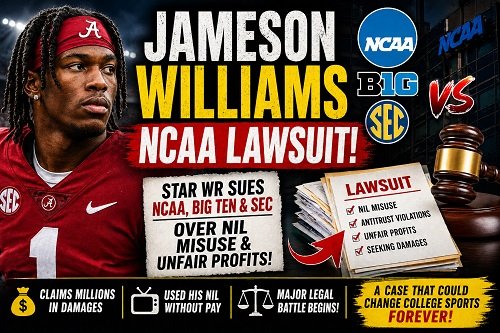
Williams’ lawsuit claims that the NCAA, Big Ten, and SEC used his name, image, and likeness (NIL) without paying him.
According to reports, the lawsuit argues that:
● These organizations profited from his NIL through TV broadcasts, highlights, and social media
● He was not allowed to monetize his own brand during college
● He received “zero compensation” despite generating value
The lawsuit also states that these entities continue to use his content even today without proper payment.
Williams is now seeking financial damages for what he believes he should have earned in a fair marketplace.
Legal Claims and Allegations
The case is not just a simple compensation dispute. It includes serious legal accusations.
Williams has reportedly accused the NCAA and conferences of:
● Antitrust violations (restricting fair market competition)
● Unfair business practices
● Misuse of identity under federal law
● Deceptive and monopolistic behavior
The lawsuit references major laws like the Sherman Antitrust Act and the Lanham Act, showing how serious the claims are.
His legal team argues that the system was designed in a way that prevented athletes from earning money while organizations made huge profits.
Why Timing Matters
One key point in this case is timing.
NIL rules officially changed in 2021, allowing college athletes to earn money through endorsements and sponsorships. However, most of Williams’ college career happened before these changes took effect.
Because of that, he claims he lost out on major earnings opportunities during his peak college years.
The lawsuit also highlights that even after NIL rules changed, past players like him were never compensated for earlier use of their identity.
What Williams Wants
Williams is asking for more than just recognition. His demands include:
● Compensation for past NIL usage
● Payment for missed opportunities like endorsements and social media earnings
● A share of revenue from game broadcasts and licensing deals
● A court order preventing further use of his NIL without permission
In simple terms, he wants both back pay and future protection.
Bigger Impact on College Sports
This case could have huge consequences.
If Williams wins, it may:
● Open the door for thousands of former athletes to file similar lawsuits
● Force the NCAA to pay retroactive compensation
● Change how past NIL rights are handled in courts
Experts believe this case could become as important as earlier legal battles that forced the NCAA to allow NIL earnings in the first place.
NCAA and Legal Uncertainty
So far, the NCAA and conferences have not fully responded publicly in detail. But cases like this are becoming more common as former athletes push back against past restrictions.
Courts will now decide whether the old system was unfair enough to justify compensation.
Final Takeaway
The Jameson Williams NCAA lawsuit is more than just a personal legal fight. It represents a turning point in college sports history.
For years, athletes generated billions in revenue but were not allowed to earn from their own identity. Now, players like Williams are challenging that system.
The final outcome is still uncertain. But one thing is clear—this case could reshape how college sports deals with past and future athlete rights.