The lawsuit involving United Airlines and former flight attendant Yihsing Tien has quickly become one of the most talked-about legal disputes in aviation this year. What started as an injury case has now turned into a wider debate about employee rights, corporate power, and the fairness of legal cost recovery.
The Incident That Started It All
Yihsing Tien joined United Airlines in 2013 and reportedly maintained a clean record during her time with the company. Things changed in 2018 when she suffered a serious accident during a crew layover.
According to court filings, Tien fell at a hotel during a layover, sustaining multiple injuries, including damage to her knees, shoulder, elbow, and wrist. The injuries were severe enough to require surgery and extended medical leave.
This incident marked the beginning of a long and complicated dispute between Tien and the airline.
The Medical Leave Confusion
After her injury, Tien was placed on medical leave. She claims she received official communication from United stating that her leave would extend until January 2023.
However, there was a critical issue.
Under United’s employment contract, the maximum allowable medical leave was three years, meaning her leave should have ended in January 2022—not 2023.
Tien argued that the incorrect date misled her. She believed she had more time to recover and return to work. But according to her complaint, United did not contact her during her leave to clarify her return options or discuss accommodations.
Termination and Legal Action
In January 2022, instead of receiving support or guidance, Tien received a termination letter.
She appealed the decision, stating that if she had known the correct deadline, she could have attempted to return to work or requested reasonable accommodations.
United rejected her appeal, arguing that she should have been able to calculate the leave period herself based on company policy.
Following this, Tien filed a lawsuit alleging disability discrimination and retaliation. Her case was filed in a California federal court as a civil rights employment dispute.
Court Decision: A Major Setback
The court ultimately dismissed Tien’s lawsuit, stating that she had failed to properly establish her claims under the law.
However, the story did not end there.
While the dismissal was a win for United Airlines, what happened next sparked even more controversy.
The $22,000 Legal Fees Controversy
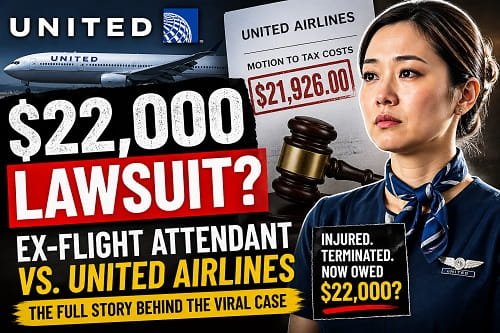
After winning the case, United Airlines moved to recover its legal costs from Tien—amounting to approximately $21,926.
Initially, the court approved this request, ordering Tien to pay the amount.
This move drew widespread attention, as it appeared to pit a multi-billion-dollar corporation against an unemployed former employee.
Later, the amount was reduced to around $12,500 after an initial appeal. But even this reduced figure was challenged by Tien, who argued that paying such a sum would cause severe financial hardship.
Court Reopens the Issue
In a significant development, a federal judge agreed to review the cost order again.
The court cited several key factors:
● Tien’s limited financial means
● The broader public interest involved in employment and civil rights cases
● The risk that such cost penalties could discourage other employees from filing legitimate claims
This decision has kept the case alive and pushed it back into the spotlight.
Why This Case Matters
The lawsuit is not just about one employee or one airline. It raises larger questions:
● Should companies recover legal fees from individuals in employment disputes?
● Does this discourage workers from filing valid claims?
● How much responsibility lies with employers when communication errors occur?
Tien’s legal team has argued that her case was not frivolous. In fact, several of her claims initially survived early legal challenges, suggesting the case had merit before being dismissed on technical grounds.
A David vs. Goliath Narrative
The financial contrast has become a key talking point.
United Airlines reported revenues exceeding $59 billion in 2025, while Tien remains unemployed and financially strained.
This imbalance has turned the case into a symbolic “David vs. Goliath” battle, attracting attention from legal experts, labor advocates, and the general public.
What Happens Next?
The court’s review of the legal costs will be crucial.
If the cost order is overturned or reduced further, it could set an important precedent protecting employees from financial penalties after unsuccessful lawsuits.
If upheld, it could reinforce the right of corporations to recover legal costs—even in sensitive civil rights cases.
Final Thoughts
The United Airlines–Yihsing Tien lawsuit shows how a workplace injury can escalate into a major legal and ethical debate.
It’s not just about who wins or loses in court. It’s about fairness, communication, and whether the legal system truly protects individuals when they stand against large corporations.
As the case continues, its outcome could shape how similar disputes are handled in the future—not just in aviation, but across all industries.