In 2026, Trader Joe’s found itself in fresh legal trouble—this time over something as simple, and as personal, as coffee. A new lawsuit claims that one of its coffee products may not be what customers think it is. The issue isn’t taste or quality. It’s about caffeine—and whether shoppers were misled.
The Core Allegation
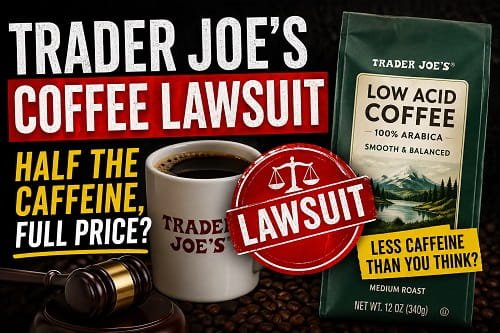
At the center of the case is a coffee product marketed as a regular, fully caffeinated blend. According to the lawsuit, that claim might not be accurate.
Consumers allege that the coffee—often referred to as a “low acid” variety—actually contains significantly less caffeine than standard coffee. In fact, independent testing cited in the complaint suggests it may have about half the caffeine of a typical cup.
That difference matters more than it sounds. For many people, caffeine isn’t just a feature—it’s the reason they drink coffee at all.
Why This Could Be Misleading
The legal argument is built around a simple idea: labeling.
In the coffee industry, there’s a common expectation. If a product has reduced caffeine, it’s usually labeled clearly—terms like “decaf” or “half-caff” are standard. But in this case, plaintiffs claim there was no such disclosure.
So, customers may have bought the product believing it would give them the usual caffeine boost, when in reality, it didn’t.
The lawsuit argues this crosses into false advertising, because the product’s true nature wasn’t made clear at the time of purchase.
What the Plaintiffs Are Saying
The people behind the lawsuit are not just raising a technical issue—they’re pointing to everyday impact.
The complaint highlights that many consumers rely on caffeine for energy, focus, and daily functioning. If a coffee delivers less caffeine than expected, it changes the product’s value entirely.
One key argument in the case is this:
If customers had known the coffee was lower in caffeine, they might not have bought it—or at least not paid the same price.
That’s where the legal claim for damages comes in.
Earlier Related Disputes
Interestingly, this isn’t the first time Trader Joe’s coffee has faced scrutiny.
Back in 2025, a coffee company called Puroast filed a separate lawsuit making a similar claim. They argued that Trader Joe’s “low acid” coffee was effectively lower in caffeine but not marketed that way, creating confusion in the market.
That earlier case focused more on competition and product positioning. The new 2026 lawsuit shifts the focus toward consumer rights and transparency.
Trader Joe’s Response
As of now, Trader Joe’s has not publicly responded in detail to the latest coffee lawsuit.
That’s not unusual in early-stage litigation. Companies often wait before making formal statements, especially while legal proceedings are ongoing.
What the Lawsuit Wants
The plaintiffs are asking for a few things:
● Financial compensation for affected customers
● Clearer labeling on the product
● Potential changes in how the coffee is marketed
In short, they want both accountability and transparency going forward.
Why This Case Matters
At first glance, this might seem like a small issue—just coffee. But cases like this often have wider impact.
Food labeling laws are strict for a reason. Consumers depend on accurate information to make everyday choices. When that trust is questioned, it can lead to bigger legal and regulatory changes.
If the court sides with the plaintiffs, it could push not just Trader Joe’s—but the entire industry—to be more precise about caffeine content, even in products not traditionally labeled that way.
Final Thoughts
The Trader Joe’s coffee lawsuit is still unfolding, and no final judgment has been made yet. But it highlights a simple truth: even small details, like caffeine levels, can carry real weight in the eyes of the law.
For now, it’s a case worth watching—especially if you’re someone who depends on that morning cup to actually do its job.