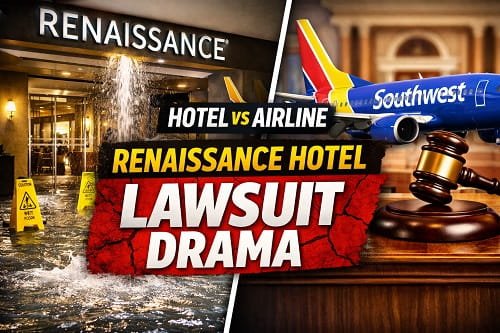
A recent lawsuit involving a Renaissance hotel and Southwest Airlines has drawn attention after a costly incident during a routine airline crew stay. The case, which surfaced in 2026, highlights how a single event inside a hotel room can turn into a major legal and financial dispute.
Background of the Incident
The lawsuit centers on a Renaissance hotel in Fort Lauderdale, Florida, where a Southwest Airlines flight attendant was staying during a layover in February 2025. According to reports, the crew member allegedly interfered with a fire sprinkler system inside her room.
What followed was not a small accident.
The sprinkler system reportedly activated not just in her room but also in multiple nearby areas. Water quickly spread through several parts of the hotel, including guest rooms and common spaces.
Extent of the Damage
The hotel claims the incident caused extensive water damage across the property. This was not limited to carpets or furniture—it affected key operational areas such as:
- Guest rooms
- Hallways
- Front desk area
- Office spaces
Because of the flooding, the hotel had to cancel multiple reservations. This meant direct revenue loss on top of repair costs.
Professional restoration teams were brought in to dry, sanitize, and repair the affected areas. The total cost of damages has been estimated at around $215,576 (over ₹1.7 crore).
Legal Claims Filed by the Hotel
The Renaissance hotel has filed a lawsuit against Southwest Airlines, arguing that:
- The flight attendant acted negligently
- The airline is responsible for the actions of its employee
- The damages should be covered by the airline or its insurer
Although the individual flight attendant has also been named in the lawsuit, the main financial liability is being directed at the airline.
The hotel submitted its claim through Southwest’s insurance, but the dispute escalated into legal action when the matter was not resolved quickly.
Southwest Airlines’ Position
As of now, Southwest Airlines has not publicly responded in detail to the allegations.
However, cases like this usually depend on a few key legal questions:
- Was the employee acting within the scope of her job?
- Was the act truly negligent or accidental?
- Does the airline’s insurance cover such incidents?
The answers to these questions will likely decide who ultimately pays for the damages.
Why This Case Matters
At first glance, this might look like a simple accident. But legally, it raises bigger issues about corporate responsibility.
Hotels frequently host airline crew members under business agreements. When something goes wrong, liability can become complicated.
This case is important because it may set an example for:
- How hotels handle damage caused by airline staff
- How airlines manage risk during employee stays
- The role of insurance in covering such incidents
If the court rules in favor of the hotel, airlines may need stricter policies for crew conduct during layovers.
Financial and Industry Impact
For the hotel, the losses go beyond repair costs. Cancelled bookings, reputational impact, and operational disruption all add up.
For Southwest Airlines, even if the amount seems small compared to its size, repeated incidents like this can affect:
- Insurance premiums
- Brand reputation
- Legal exposure
In the hospitality and aviation industries, partnerships rely heavily on trust. Incidents like this can strain those relationships.
Broader Legal Context
This lawsuit is part of a wider trend where companies are being held accountable for employee actions, even outside traditional workplaces.
Courts often examine whether:
- The employee was on official duty
- The company benefited from the stay
- The incident was foreseeable
Since airline crew stays are part of regular operations, the hotel’s argument that Southwest is responsible may carry weight.
What Happens Next?
The case is still developing. The court will review evidence, including:
- Incident reports
- Maintenance records
- Statements from the flight attendant
- Insurance details
Possible outcomes include:
- A settlement between the hotel and airline
- A court ruling assigning liability
- Insurance covering part or all of the damages
Final Thoughts
This lawsuit shows how a small moment—like tampering with a sprinkler—can turn into a six-figure legal battle.
For businesses, it’s a reminder that risk doesn’t stop at the workplace door. For hotels and airlines, it highlights the importance of clear responsibility and strong agreements.
As the case unfolds, it will be worth watching how the court balances accident, negligence, and corporate accountability.