The popular David protein bar has recently become the center of legal controversy in the United States. Known for its high-protein and low-calorie marketing claims, the brand quickly gained attention among fitness enthusiasts, athletes, and social media influencers. However, lawsuits filed against the company have raised serious questions about product labeling and competition practices.
Two major legal issues are currently being discussed: allegations of misleading nutrition labels and a separate competition dispute involving a special ingredient used in the bars. These lawsuits have drawn widespread attention from the food industry and consumers alike.
Rise of David Protein Bars
David protein bars became popular because of their bold claim: delivering high protein with very low calories. For people who are dieting or trying to build muscle while maintaining a calorie deficit, such products appear extremely attractive.
The brand promoted its bars as containing around 28 grams of protein with only about 150 calories, making them stand out from many traditional protein bars. As a result, the product quickly gained traction online and started appearing in gyms, health stores, and fitness communities.
But the same claims that helped the brand grow are now the focus of legal scrutiny.
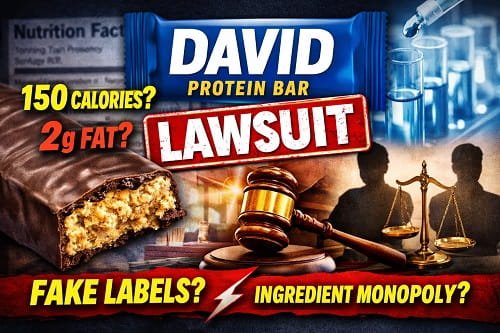
Lawsuit Over Nutrition Label Accuracy
One of the most talked-about lawsuits is a consumer class-action case that claims the company may have misrepresented the nutritional values of its bars.
According to the complaint filed in a U.S. federal court, independent testing allegedly found that the bars may contain significantly higher calories and fat content than stated on the packaging. The lawsuit argues that consumers relied on the product’s low-calorie marketing and purchased it believing it was a healthier option.
If the allegations are proven true, it could mean that customers were unknowingly consuming more calories than expected. For people tracking their diet strictly—such as athletes, bodybuilders, or individuals following weight-loss plans—this difference could be important.
The plaintiffs claim they would either not have purchased the product or paid less for it if they had known the actual nutritional values.
The lawsuit seeks compensation for consumers and requests that the company correct its labeling practices.
Company’s Response to the Allegations
The company behind David protein bars has denied the accusations and maintains that its labeling complies with food regulations.
According to the company, the dispute arises from the method used to calculate calories for certain ingredients. They argue that the nutritional calculations follow accepted regulatory standards.
In the food industry, calorie calculation can sometimes become complicated when new ingredients or alternative fats are used. Because of this, disagreements between manufacturers and critics over nutritional values are not entirely uncommon.
The company has stated that it plans to defend its labeling practices in court.
The Ingredient Dispute and Antitrust Claims
Apart from the labeling lawsuit, another legal battle involves a special ingredient used in the bars.
David protein bars contain a unique fat substitute called EPG (esterified propoxylated glycerol). This ingredient behaves like fat in food but contains significantly fewer calories. Because of this property, it allows companies to create products that taste rich while keeping calorie counts low.
The controversy began after the company associated with the David bar brand acquired the business that produces EPG. Some competing food manufacturers claim that after the acquisition, they were suddenly unable to obtain the ingredient.
These companies have filed an antitrust lawsuit, accusing the brand of restricting access to EPG in order to dominate the low-calorie snack market.
According to the complaint, the move allegedly gave the company an unfair advantage because competitors could no longer produce similar low-calorie products using the same ingredient.
However, the company argues that owning the ingredient supplier does not legally require them to sell it to competitors.
Why the Case Matters for the Food Industry
The David protein bar controversy highlights several broader issues in the modern food market.
First, it raises questions about transparency in nutrition labeling. Consumers increasingly rely on accurate labels when choosing foods for health and fitness purposes. Even small differences in calories or macronutrients can influence purchasing decisions.
Second, the dispute reflects the growing role of food technology and specialized ingredients in modern snacks. As companies experiment with new fat substitutes, protein blends, and sugar alternatives, regulators and scientists often debate how these ingredients should be measured and labeled.
Finally, the antitrust claims point to the competitive nature of the health-food industry, where new ingredients and formulas can provide a significant market advantage.
What Consumers Should Know
For now, the lawsuits are still ongoing, and no final court decision has been made. This means the allegations have not yet been proven.
Consumers should remember that legal cases involving food products often take months or even years to resolve. During this time, companies may continue selling their products while the dispute moves through the legal system.
The case serves as a reminder that while marketing claims can be attractive, it is always wise for consumers to stay informed and follow updates about the products they use regularly.
Conclusion
The lawsuits surrounding David protein bars have sparked a debate about labeling accuracy, food innovation, and competition in the health-snack industry. While the company denies wrongdoing, the legal challenges could shape how similar products are regulated and marketed in the future.
As the case develops, both consumers and the fitness community will be watching closely to see how the courts address these claims and what impact the outcome may have on the broader nutrition market.