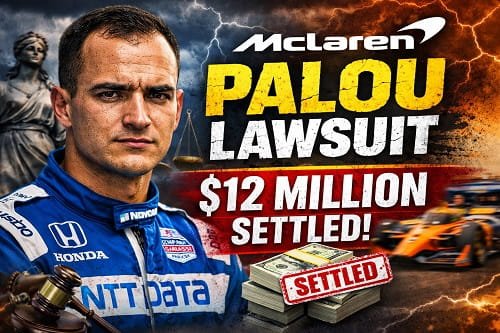
The long-running legal dispute between Alex Palou and McLaren Racing has finally come to an end. After nearly three years of litigation, both sides have reached a private settlement, closing one of the most unusual and high-profile contract battles in modern motorsport.
The case drew attention not only because of the money involved, but also because it highlighted the growing tension between IndyCar and Formula 1 ambitions, and the risks drivers face when navigating multi-series careers.
How the dispute began
In 2022, Palou was at the peak of his career. He had already established himself as one of IndyCar’s most talented drivers and was attracting serious interest from major teams. That year, he signed a contract with McLaren that would have seen him race for the team from 2024 through 2026. The deal was widely viewed as a stepping stone toward a possible Formula 1 opportunity within McLaren’s wider racing structure.
At the time, Palou was still under contract with Chip Ganassi Racing, one of IndyCar’s most successful organizations. However, the McLaren agreement was set to take effect later, and publicly, it appeared that Palou’s future had been settled.
That changed in 2023.
Why Palou backed out
In mid-2023, Palou announced that he would remain with Chip Ganassi Racing instead of joining McLaren. This move immediately triggered legal action. McLaren accused Palou of breaching a valid and binding contract and filed a lawsuit in the United Kingdom, where the contract was governed.
Palou did not dispute that he had signed the agreement or that he later chose not to honor it. His defense focused on context. According to court filings, Palou believed that signing with McLaren would lead to a clear and guaranteed path to Formula 1. When it became evident that no firm F1 seat would be provided, he decided that staying with Ganassi offered more security and long-term stability.
This distinction proved crucial in court.
The trial and the verdict
Because Palou admitted breach of contract, the trial was not about liability. Instead, the six-week proceeding focused solely on damages. McLaren initially sought approximately $31 million, arguing that Palou’s decision caused significant financial and reputational harm.
Earlier this year, a British court ruled largely in McLaren’s favor but awarded a much smaller amount than requested. The court ordered Palou to pay roughly $12 million in damages. While this was a major legal victory for McLaren, it fell well short of the original claim.
Following the verdict, the case appeared likely to head toward an appeal, with both sides signaling dissatisfaction with aspects of the ruling.
The settlement
Instead of continuing the legal battle, Palou and McLaren have now agreed to settle privately. The exact terms have not been disclosed, which is typical in cases of this nature. What is known is that the settlement brings the dispute to a definitive end, with no appeal moving forward.
The lawsuit lasted around 30 months, making it one of the longest and most public contract disputes involving an active IndyCar driver.
Palou speaks out
Palou addressed the situation publicly while speaking ahead of the season-opening St. Petersburg Grand Prix. His comments were notably candid.
He described the litigation as exhausting and said it was an experience he would not recommend to anyone. Palou acknowledged that the process took a mental toll and stretched across multiple seasons of his career. At the same time, he expressed relief that the matter is finally behind him and emphasized his desire to move forward without distractions.
Why the case matters
This lawsuit was about more than a single driver and a broken contract. It exposed the complexity of modern motorsport careers, where drivers often juggle opportunities across multiple series and continents. It also showed that top teams are increasingly willing to pursue legal remedies when agreements fall apart.
For drivers, the case serves as a warning. Even when circumstances change, contracts carry real weight, and walking away can result in years of legal and financial consequences. For teams, it reinforced the importance of clear language and enforceable terms when recruiting talent.
The road ahead
With the settlement finalized, Alex Palou can now focus entirely on racing. He remains a central figure in IndyCar and continues to perform at an elite level. McLaren, meanwhile, closes a costly and time-consuming chapter as it continues to balance its IndyCar and Formula 1 ambitions.
The dispute is over, but its lessons will likely linger across the paddock for years to come.