T-Mobile, one of the largest telecom companies in the United States, is currently dealing with several legal disputes that have drawn attention from customers and industry observers. These cases involve complaints about promotional offers, advertising claims, and past data security issues.
While large telecom companies often face legal challenges, the current cases against T-Mobile have raised questions about marketing practices and customer protection. Here is a clear explanation of the main lawsuits involving the company and what they mean for customers.
Lawsuit Over $200 Gift Card Promotion
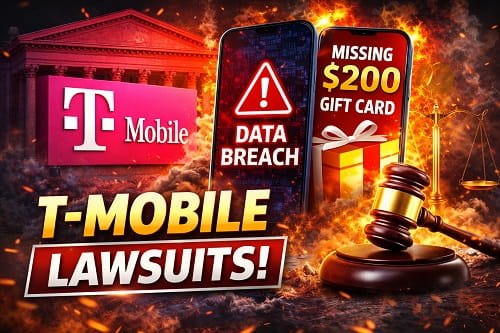
One of the most discussed legal complaints involves a promotional offer that promised customers a $200 gift card when they opened a new line or upgraded their device.
According to the lawsuit, many customers claim they signed up for the promotion after being told they would receive the gift card. However, some customers later reported that they never received the reward even after meeting the conditions of the offer.
The complaint argues that the promotion was misleading and unfair to consumers, especially for those who added lines or purchased devices specifically to qualify for the gift card.
The case was filed as a class-action lawsuit, which means a group of affected customers can join the case together. If the court decides in favor of the customers, the company could be required to compensate those who were impacted by the promotion.
T-Mobile has not admitted wrongdoing and may challenge the claims as the case moves forward through the legal system.
Advertising Dispute With a Rival Telecom Company
Another legal matter involving T-Mobile relates to advertising claims about how much money customers can save by switching to its services.
A competing telecom company argued in court that T-Mobile advertisements claiming customers could save large amounts of money each year were misleading. According to the complaint, the advertisements compared promotional prices with the regular prices of competitors, which may have created an inaccurate impression for consumers.
The lawsuit claims that such comparisons could influence customer decisions unfairly by presenting savings that may not apply in every situation.
T-Mobile responded by defending its advertising practices, stating that its statements were accurate and that the comparisons used in advertisements were valid. The company has argued that its marketing reflects real savings for many customers.
This legal dispute focuses mainly on advertising rules and how companies compare their services in public marketing campaigns.
Data Breach Settlement From Previous Security Incident
Another important legal issue connected to T-Mobile involves a large data breach that occurred in the past.
In that incident, hackers gained access to personal information belonging to millions of customers. The exposed data reportedly included names, phone numbers, addresses, and in some cases identification details.
Following the breach, several lawsuits were filed by customers who claimed the company did not adequately protect their personal information.
To resolve the claims, T-Mobile agreed to a large settlement worth hundreds of millions of dollars. The settlement allows eligible customers to receive compensation depending on the impact the breach had on them.
Some individuals may receive smaller payments, while customers who experienced financial losses related to the breach may be eligible for larger compensation amounts.
The settlement also requires the company to strengthen its cybersecurity measures in order to better protect customer data in the future.
Other Consumer Complaints
Apart from the major lawsuits mentioned above, T-Mobile has faced additional complaints related to customer billing and pricing policies.
Some customers have alleged that certain phone plans were changed or increased in price despite earlier promises about stable pricing. Others have reported unexpected charges appearing on their phone bills.
These complaints have not always resulted in major lawsuits, but they have contributed to broader discussions about transparency in telecom pricing and promotional offers.
Companies in the telecom industry often face scrutiny because their services involve long-term contracts, promotional offers, and complex pricing structures.
What Happens Next
The legal cases involving T-Mobile are still ongoing, and it may take months or even years before final decisions are reached in court.
For the promotional gift card lawsuit and advertising dispute, the courts will determine whether the claims made against the company are valid and whether affected customers are entitled to compensation.
Meanwhile, the data breach settlement is already moving forward, and eligible customers may receive payments depending on the details of their claims.
These legal proceedings will likely influence how telecom companies present promotions, handle customer information, and communicate pricing in the future.
Final Thoughts
T-Mobile remains one of the largest telecom providers in the United States, serving millions of customers across the country. However, the recent legal disputes show the challenges large technology and telecom companies face when dealing with marketing claims, customer promotions, and data security.
The outcome of these cases may not only affect T-Mobile but could also shape how telecom companies manage promotional offers and customer protection policies in the years ahead.