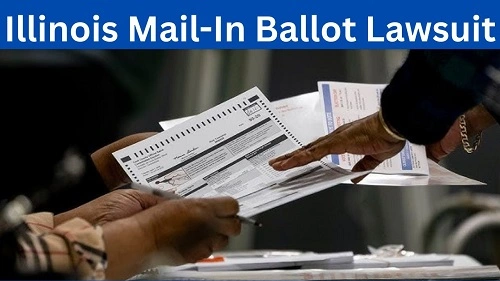
Just in case you didn’t know this yet, this Illinois Mail-In Ballot Lawsuit is actually about a Republican congressman going down the legal route to raise some really genuine questions regarding the Mail-In ballots and how they’re counted after the election is done. If you haven’t seen anything about it in the mainstream media, then it should be your responsibility to get to know about it a little more as a respected citizen of this country. After all, every vote counts, don’t you think?
What Is The Illinois Mail-In Ballot Rule?
Illinois election officials can count mail-in ballots that arrive after Election Day only if the ballots are postmarked on or before Election Day and be received by the officials no later than 14 days after the Election Day. That is why even if a ballot arrives late, it can still be counted if it was mailed in time.
This is not special for the state of Illinois. Several other states and U.S. territories also allow their mail voting ballots that arrive late to be counted for a limited time period beyond Election Day. So the State of Illinois is not doing something totally different here.
Who Filed The Lawsuit?
The lawsuit was brought by U.S. Representative Michael Bost, a Republican from Illinois. In his lawsuit, he challenged the state’s allowance of a two-week period to count mail ballots after Election Day.
According to him, this isn’t all just fair, like, when the Election Day for federal offices was proposed, that should not mean that the ballots will be counted for days on end after that. This just defies the overall purpose of this Election Day concept as a whole. And that’s not just it, he even went on to point out how it is all just extra expenses because of all this to monitor the ballot counting after the Election Day. So, there’s this perspective too.
Why Did The Lower Courts Reject The Case?
The lower courts refused to hear the case before it got to the Supreme Court. They said that Bost had not demonstrated any individual harm caused by the rule.
Basically, to be able to challenge a law, a person must prove that he or she has been directly or personally harmed by the law. The courts found that Bost didn’t provide evidence of such personal harm, and it was even a point against him since he was elected.
Bost did not agree with that, and he kept filing appeals until the Supreme Court took up the case.
What Did The Supreme Court Decide In 2026?
In a 7-2 majority decision, the Supreme Court decided on January 14, 2026, that Bost had the standing to challenge the rule. However, they left the question of whether the Illinois ballot rule itself is legal, undecided.
And they merely acknowledged that a candidate who’s standing up in the elections has the locus standi to bring such a case to court.
And sure enough, as you must have expected, in this case, the Chief Justice John Roberts clearly pointed out how the method of vote counting directly impacts the candidates after the elections are already conducted and just the vote counting part is remaining.
Did All Justices Agree?
Well, not all of them, but a few did agree.
To be more specific about that, like, seven justices in total agreed that Bost could sue, but they had different reasons for their agreement. In her opinion, Amy Coney Barrett agreed with the result and went on to even add that the extra campaign spending during the extended counting period has caused genuine and real harm, which can be considered a real injury in court cases like these.