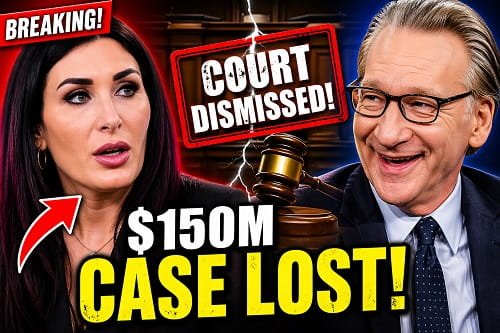
The most recent legal development involving Laura Loomer came in April 2026, when a U.S. federal court dismissed her high-profile defamation lawsuit against comedian Bill Maher and HBO. The case had drawn attention because of its political angle and the large damages Loomer was seeking.
What the 2024–2026 lawsuit was about
In 2024, Loomer filed a defamation lawsuit reportedly seeking around $150 million in damages. The case centered on a joke made by Maher during an episode of his show, where he suggested—humorously—that Loomer had a personal relationship with former U.S. President Donald Trump.
Loomer argued that this statement damaged her reputation and harmed her political career. Her legal claim relied on defamation law, which generally requires proving three key things:
● A false statement presented as fact
● Malice or intent to harm
● Actual damage caused by the statement
Court decision in April 2026
In April 2026, a federal judge dismissed the case entirely. The ruling was quite clear: Maher’s comment was considered a joke, not a factual claim.
The judge found that:
● A reasonable viewer would interpret the statement as satire or humor
● There was no provable false factual claim
● Loomer failed to show legal elements like malice and measurable damages
Because of this, the court concluded the lawsuit did not meet the legal standard required for defamation.
This outcome reflects a long-standing principle in U.S. law: satire and comedic speech are strongly protected under the First Amendment.
Loomer’s reaction
Following the dismissal, Loomer publicly criticized the ruling. She argued that the decision was unfair and claimed it undermined the ability of individuals—especially women—to defend their reputations in court.
However, the court’s reasoning stayed focused on legal standards rather than personal or political arguments.
Context: her history with lawsuits
This was not Loomer’s first legal battle. Over the years, she has filed several lawsuits, most of which have not succeeded:
● Against tech companies (Twitter, Facebook, Google):
Loomer claimed political bias and censorship after being banned. Courts dismissed these cases, ruling that private companies are not bound by the First Amendment in the same way governments are.
● Against CAIR (Council on American-Islamic Relations):
She alleged a conspiracy behind her social media ban. The case was dismissed, and she was later ordered to pay legal fees.
● Against Rep. Rashida Tlaib:
This lawsuit, related to an alleged altercation, was also dismissed in federal court.
● RICO and censorship lawsuits (2022 onward):
Additional cases accusing social media platforms of racketeering were dismissed and later rejected on appeal.
Overall, courts have repeatedly found that her claims lacked sufficient legal basis or evidence.
Why this latest case matters
The 2026 dismissal is important for a few reasons:
1. Strong protection for satire
The ruling reinforces that jokes—even controversial ones—are protected speech if they are not meant to be taken literally.
2. High bar for defamation
Public figures like Loomer must prove not just harm, but intentional falsehood. That standard is difficult to meet.
3. Pattern in legal outcomes
This case continues a pattern where courts have consistently ruled against her claims, especially those involving speech, media, or online platforms.
Final takeaway
The Laura Loomer lawsuit against Bill Maher ended in a complete dismissal in April 2026. The court’s message was simple: humor is not defamation unless it can reasonably be seen as a factual claim.
For now, the case closes another chapter in a long series of legal challenges filed by Loomer—most of which have struggled to succeed under U.S. law.