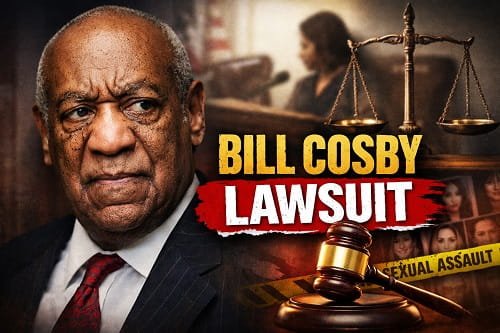
The lawsuits involving Bill Cosby became one of the most talked-about legal stories in modern entertainment history. What began as individual allegations eventually turned into a wave of civil cases that shook Hollywood, raised questions about power and accountability, and helped fuel the global #MeToo movement.
This wasn’t just about one man. It became a symbol of how difficult it can be for victims to come forward—and what can happen when they finally do.
How It All Started
For decades, Bill Cosby was known as “America’s Dad,” largely because of his role in The Cosby Show. But behind that image, allegations had been quietly surfacing since the early 2000s.
The turning point came in 2004 when Andrea Constand accused Cosby of drugging and sexually assaulting her. At the time, the case didn’t lead to criminal charges due to insufficient evidence. However, it resulted in a civil settlement in 2006, which remained confidential for years.
For a while, the story faded from public view. But it didn’t disappear.
The Wave of Allegations
Around 2014, things changed dramatically. Multiple women came forward with similar accusations against Cosby. Many claimed that he had drugged and assaulted them over several decades.
The number of accusers eventually crossed 50.
This pattern of allegations made it harder to dismiss the claims as isolated incidents. Public opinion began to shift quickly. Media coverage intensified, and Cosby’s long-standing reputation started to crumble.
Major networks canceled his projects. Public appearances were shut down. Honors and awards were revoked. What had been a quiet controversy turned into a national reckoning.
Criminal Trial and Conviction
In 2015, prosecutors reopened the case involving Andrea Constand. This time, new evidence and testimony helped move things forward.
Cosby was charged with aggravated indecent assault.
His first trial in 2017 ended in a mistrial due to a deadlocked jury. But the retrial in 2018 led to a different outcome. Cosby was found guilty on three counts and sentenced to 3 to 10 years in prison.
It was a historic moment. Cosby became one of the first high-profile celebrities to be convicted in the #MeToo era.
The 2021 Release
Just when it seemed the legal chapter was closed, another twist came.
In 2021, the Pennsylvania Supreme Court overturned Cosby’s conviction. The court ruled that a previous agreement with a former prosecutor—who had promised not to charge Cosby—had been violated.
Because of that, Cosby was released from prison after serving nearly three years.
The decision sparked strong reactions. Some saw it as a legal technicality overriding justice, while others argued it was necessary to uphold due process.
Civil Lawsuits Continue
Even after his release, Cosby’s legal troubles didn’t end. Several civil lawsuits continued to move forward.
In 2022, a California jury found Cosby liable in a civil case brought by Judy Huth. She had accused him of sexually assaulting her as a teenager in the 1970s.
The jury awarded her $500,000 in damages.
Civil cases have a lower burden of proof compared to criminal trials, which means plaintiffs only need to show that their claims are more likely true than not. This has allowed some accusers to seek justice even when criminal convictions were not possible.
Impact on Hollywood and Society
The Cosby lawsuits did more than bring down a powerful figure. They changed how people talk about abuse, especially in industries where power imbalances are common.
Before this, many victims stayed silent out of fear—fear of not being believed, of damaging their careers, or of facing backlash.
After Cosby, more voices began to speak up.
The case helped open the door for broader conversations about consent, accountability, and systemic protection of influential figures. It also encouraged institutions to take allegations more seriously.
A Complicated Legacy
Bill Cosby’s legacy is now deeply divided.
On one hand, he was a pioneer in television. He broke racial barriers and created content that shaped American culture.
On the other hand, the lawsuits and allegations have permanently altered how people view him.
For many, his contributions to entertainment are overshadowed by the accusations and legal battles. For others, the legal outcomes—especially the overturned conviction—leave room for debate.
Where Things Stand Today
As of now, Cosby is a free man, but his public image remains damaged. Civil lawsuits may still arise depending on state laws and timelines, especially as some states have extended statutes of limitations for sexual assault cases.
The broader impact of the lawsuits continues to be felt.
The entertainment industry is more cautious. Legal systems are slowly adapting. And victims today may feel slightly more empowered to come forward than they did years ago.
Final Thoughts
The Bill Cosby lawsuits are not just about one celebrity. They represent a turning point in how society deals with allegations of abuse.
The story is messy, emotional, and legally complex. There are no simple conclusions here.
But one thing is clear—the silence that once protected powerful figures is no longer as strong as it used to be.