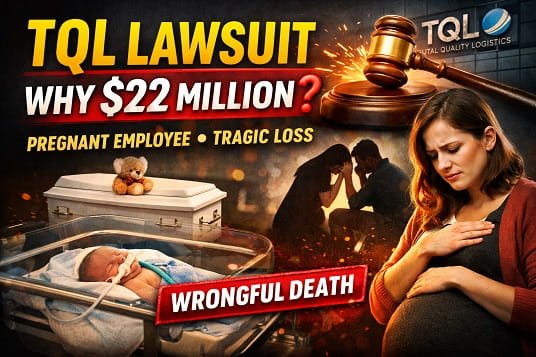
A recent lawsuit involving Total Quality Logistics (TQL) has drawn widespread attention after a U.S. jury awarded more than $22 million in damages in a wrongful death case. The story is deeply emotional, but it also raises serious questions about workplace policies, employee safety, and corporate responsibility.
Here’s a clear breakdown of what happened and why this case matters.
Background of the Case
The lawsuit centers around a former employee of Total Quality Logistics who was going through a high-risk pregnancy. According to court records, her doctor advised her to work from home to avoid complications.
However, the company allegedly did not approve remote work immediately. Instead, the employee was expected to continue working under normal conditions, which became a key issue in the case.
Over time, her health reportedly worsened, leading to premature childbirth. Tragically, the baby did not survive long after birth. This loss became the foundation of the wrongful death lawsuit filed against the company.
What the Jury Decided
After reviewing the evidence, the jury ruled in favor of the employee. They concluded that the company’s actions—or lack of timely response—played a role in the chain of events that led to the tragedy.
The jury awarded:
- Compensation for emotional distress
- Damages related to the wrongful death
- Punitive damages aimed at accountability
The total amount reached approximately $22 million, which is considered a significant verdict in such cases.
The decision suggests that the jury believed the company could have acted differently and possibly prevented the outcome.
Key Legal Argument
The core argument in the case was not just about workplace policy, but about duty of care.
The plaintiff’s side argued:
- The employee had clear medical instructions
- The company had the ability to allow remote work
- A delay or refusal created avoidable risk
On the other side, companies typically defend such cases by stating:
- They followed internal policies
- Decisions were made based on operational needs
- There was no direct intent to cause harm
However, in this case, the jury found the connection between workplace decisions and the outcome strong enough to justify compensation.
Why This Case Stands Out
This lawsuit is not just another corporate dispute. It stands out for a few important reasons.
1. Emotional Impact
Cases involving pregnancy and loss naturally draw strong reactions. The human element here is impossible to ignore.
2. Modern Work Culture
The issue of remote work is central. After the pandemic, work-from-home options became more common. This case questions whether companies should be more flexible in medical situations.
3. Corporate Responsibility
The verdict sends a message that companies may be held accountable not just for actions, but also for decisions they delay or deny.
Broader Implications for Employers
This case could influence how companies handle similar situations in the future.
Stronger Medical Accommodation
Employers may become more cautious when dealing with medical requests, especially those backed by doctors.
Policy Revisions
Companies might update HR policies to ensure quicker decision-making in health-related cases.
Legal Awareness
Businesses may increase legal oversight to avoid risks that could lead to large financial penalties.
Impact on Employees
For employees, the case highlights the importance of:
- Documenting medical advice
- Communicating clearly with employers
- Understanding workplace rights
It also shows that legal systems can hold organizations accountable when employee well-being is at stake.
Will There Be an Appeal?
In high-value cases like this, appeals are common. The company may challenge the verdict on grounds such as:
- Insufficient evidence
- Misinterpretation of responsibility
- Excessive damages
If an appeal happens, the final outcome could change. But for now, the jury’s decision stands as a strong statement.
Final Thoughts
The TQL lawsuit is more than just a legal case. It reflects a larger shift in how workplaces are judged—not only on performance and profit, but on how they treat people during vulnerable moments.
At its core, the case raises a simple but powerful question:
When medical advice and workplace rules clash, which one should come first?
The jury’s answer was clear.